As an Amazon Associate, we earn from qualifying purchases. Some links on this site are affiliate links at no extra cost to you. Our recommendations are based on thorough research and editorial judgment.


What Size Snowboard Should You Buy Based on Your Weight and Boot Size?

Choosing the right snowboard size hinges on rider weight and boot size for peak performance and comfort. Recommended board lengths vary by weight, with lighter riders (under 125 lbs) needing shorter boards (135-145 cm), while heavier riders (over 160 lbs) benefit from longer boards (155-163 cm). Additionally, boot size impacts snowboard width; those with size 11+ require wider boards. Proper sizing promotes stability and agility, enhancing the overall experience on the slopes. Explore further for detailed insights and buying tips.
Key Takeaways
- Choose a snowboard length that matches your weight; heavier riders need longer and stiffer boards for support, while lighter riders require shorter and softer boards.
- Align your snowboard’s width with your boot size; larger boots (size 11+) need wide boards to prevent drag, while smaller boots can fit narrower boards.
- Use manufacturer size charts for best fit; they help match your weight to board length and your boot size to waist width.
- Adjust board size according to riding style; cautious riders opt for shorter boards, while aggressive riders can choose longer boards for speed and control.
- Remember that board sizes may vary between brands; consult brand-specific sizing charts for accurate recommendations based on riding style and equipment.
Understanding Snowboard Length and Rider Weight
You may be interested


Choosing the right snowboard length is essential for riders of all skill levels, as the ideal board length directly influences performance on the slopes. Snowboard length should correlate with rider weight to guarantee snowboard balance and board stability. For instance, riders weighing up to 80 lbs generally require boards between 132-137 cm, while those in the 160-190 lbs range benefit from lengths of 155-160 cm. Different styles may also affect length selection; freestyle riders might prefer shorter boards for enhanced maneuverability, whereas all-mountain and freeride enthusiasts tend to favor longer boards, which provide improved stability and edge control. Ultimately, understanding how board length interacts with rider weight helps create an exhilarating and safe snowboarding experience. Additionally, advanced technology in leading snowboards caters to various riding styles, which can further influence length preferences.
The Importance of Rider Weight in Sizing
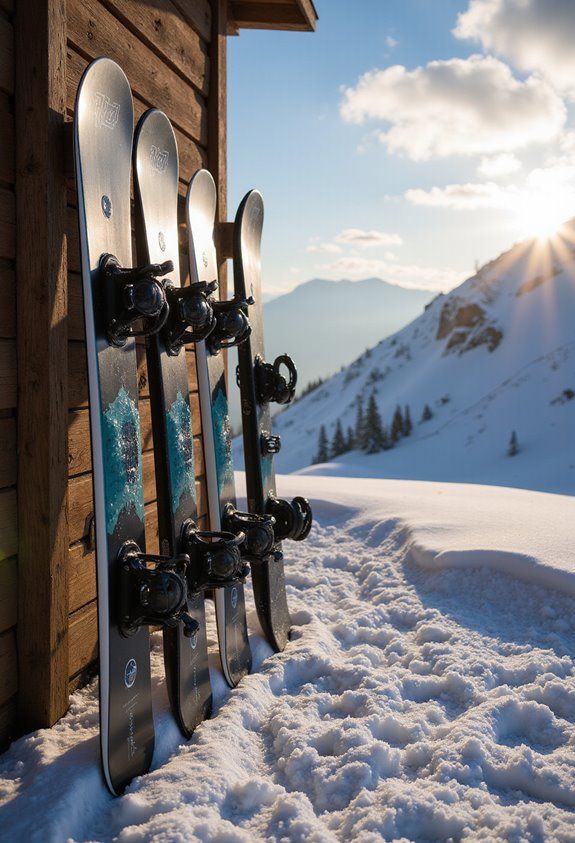
Understanding rider weight is essential when it comes to selecting a snowboard size, as it directly influences the board’s flex, performance, and overall riding experience. Rider weight determines how pressure is distributed across the snowboard, affecting its responsiveness and stability. Heavier riders benefit from longer, stiffer boards that provide the necessary support for high-speed descents, enhancing board performance in varied terrains. Conversely, lighter riders will find shorter, more flexible boards easier to maneuver, promoting a more enjoyable ride. Weight is a more reliable sizing metric than height, as it directly impacts control and safety, ensuring each rider can confidently navigate the slopes while developing their skills. Embracing the right board size according to rider weight fosters a strong sense of belonging in the snowboarding community. Additionally, choosing the right snowboard size is crucial for maximizing performance and ensuring optimal control on the slopes.
Recommended Board Lengths by Weight Range

Selecting the appropriate snowboard length tailored to a rider’s weight is essential for ensuring ideal performance on the slopes. For those under 80-85 lbs, board lengths typically range from 132 cm to 137 cm, with shorter boards favoring beginners. Riders weighing 80-120 lbs should consider boards between 135 cm and 143 cm, allowing for responsive control in park settings. For individuals 125-160 lbs, boards from 145 cm to 155 cm provide a balanced mix of stability and agility. Heavier riders, exceeding 160 lbs, benefit from lengths of 155 cm to 163 cm, ensuring enhanced stability. Additionally, boot size must align with board width to prevent drag, emphasizing the importance of understanding snowboard specifications and length necessities for a rewarding ride. Choosing the right snowboard length can greatly influence overall skiing performance, similar to how specific ski designs enhance stability and versatility on the slopes.
Recommended Products

The Pipe Snowboard Bag is big on practicality. The full-length zipper makes it easy to load and unload, while a removable strap lets you choose between over-the-shoulder or hand carry. The durable fabric construction protects your board from dings and scratches and, at less than 2 pounds, folds up small and packs away easily when not in use.
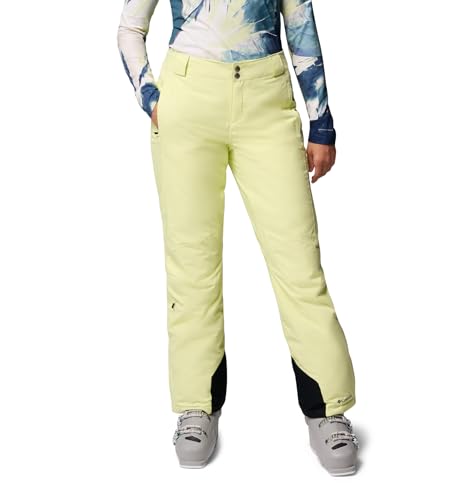
OMNI-TECH: For prolonged exposure to moderate rain and snow. Multilayered waterproof protection in a breathable material that releases excess heat and moisture, keeping you dry and comfortable no matter the conditions.

Fits Snowboards for Travel: Designed as a practical snowboard bag for carrying and protecting your board during car rides, resort days, and seasonal storage.
Flex Considerations for Different Rider Weights

Flexibility in a snowboard plays an essential role in determining how well it performs across various terrains and riding styles, particularly when accounting for the rider’s weight. Flex differences become significant; lighter riders may find soft boards (1–3) ideal for playfulness, while heavier riders require medium (4–6) for versatility. Stiff boards (7–10), while excellent for stability at speed, can overwhelm less robust riders. Perceived flex shifts with weight thresholds; a medium flex board may feel soft to heavier riders yet stiff for lighter ones. Consequently, choosing the right snowboard involves understanding personal weight and riding style, ensuring ideal performance without compromising control or safety across diverse conditions. Rider compatibility with board flex is key to an enjoyable snowboarding experience. Additionally, flex ratings are crucial as they directly impact the ride experience based on individual rider characteristics.
Recommended Products
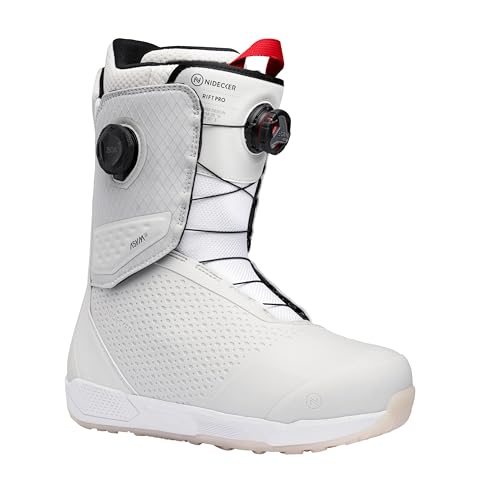
3D MOLDED LASTED TOE BOX
🏂 Shred Anytime, Anywhere! - Take your love for snowboarding to your desk, car, or couch! This pocket-sized finger snowboard lets you carve, spin, and trick your way through boredom—no snow required.

All-Mountain Versatility – Medium flex provides a balanced, responsive feel ideal for beginner to intermediate riders exploring groomers, park laps, and variable terrain.
Personal Preferences and Riding Style

Personal preferences and riding style greatly influence the choice of snowboard size and shape, as individual riders bring unique requirements to the slopes. Beginners may opt for directional boards for stability and ease of use, while advanced riders seeking to master jumps might prefer the symmetrically balanced design of true twin boards, promoting versatile riding techniques. Freestyle enthusiasts thrive on softer flex, aiding in trick execution, while freeriders benefit from sturdier options, ensuring stability on steep terrains. Terrain-specific choices, whether for powder or park, further highlight personal preferences, as tapered boards enhance flotation and control, and all-mountain designs blend features for versatility. Ultimately, understanding one’s style is essential for selecting the right snowboard that enhances overall enjoyment and performance. For optimal performance in deep powder, consider the board shape and design to ensure proper floatation and agility.
Brand and Model Variations in Sizing
When choosing a snowboard, one of the most crucial factors to take into account is the variability in sizing across different brands and models. Each brand showcases unique design philosophies, leading to brand-specific trends in sizing variations that impact how a board performs. For instance, some brands prioritize weight to determine board length, while others consider height as equally important. Additionally, width classifications can differ—what one brand labels as regular may be wide for another. Understanding these distinctions helps riders select equipment that enhances their performance and enjoyment on the slopes. Serious snowboarders should refer to brand sizing charts, which not only reflect these variations but also guide choices in alignment with personal riding styles and boot sizes. Furthermore, flex ratings can significantly influence how a board handles, making it essential to consider both size and performance features when selecting a snowboard.
Recommended Products

Using Rider Height as a Secondary Guide
After considering the variability in sizing among different snowboard brands, riders can benefit from integrating rider height as a secondary guide in their snowboard selection process. While weight remains the primary factor, height safety plays a critical role in confirming that a snowboard aligns with a rider’s proportions. Generally, the ideal board should reach between the rider’s chin and forehead, offering a physical check to gauge fit. Taller individuals may enjoy the height benefits of longer boards for added stability, particularly in rough conditions, while shorter riders might prefer a slightly shorter board for better maneuverability. This blending of height with weight and boot size creates a personalized fit, enhancing overall performance and enjoyment on the mountain. Additionally, choosing the right size snowboard can greatly improve all-mountain versatility and ensure that riders can tackle various terrains with confidence.
Ideal Board Length Based on Rider Height
Selecting the ideal snowboard length based on rider height is essential for achieving the best control, balance, and overall performance on the slopes. A general rule is that snowboard length increases with rider height, typically ranging from the rider’s chin to nose when standing upright. For instance, a rider at 5’0″ should consider boards between 133-141 cm, while those at 6’0″ often require lengths of 158-164 cm. Freeride and all-mountain riders might choose longer boards for stability, while park riders gravitate towards shorter options for agility. Additionally, height adjustments within selected board types can impact performance, enabling riders to discover their ideal fit while fostering a sense of belonging among fellow enthusiasts on the mountain. Proper flex ratings can also affect how well a snowboard performs for different riding styles and skill levels.
Board Width and Its Relation to Boot Size
Understanding board width in relation to boot size is essential for optimizing a snowboarder’s performance on the slopes. An ideal snowboard allows for a boot overhang of 1-2 cm on both the heel and toe edges, facilitating better leverage during turns while ensuring board stability. For riders with larger boots (size 11+), a wide or extra-wide board is vital to prevent excessive drag that can diminish control. Narrow boards may result in too much overhang, causing increased drag, whereas overly wide boards can hinder agility. Using manufacturer size charts can help match boot sizes to appropriate waist widths, allowing snowboarders to enjoy a smoother, more dynamic ride, while effectively managing pressure and enhancing overall safety. Additionally, flexibility impacts responsiveness of various bindings, which can further influence the choice of snowboard width.
Recommended Products
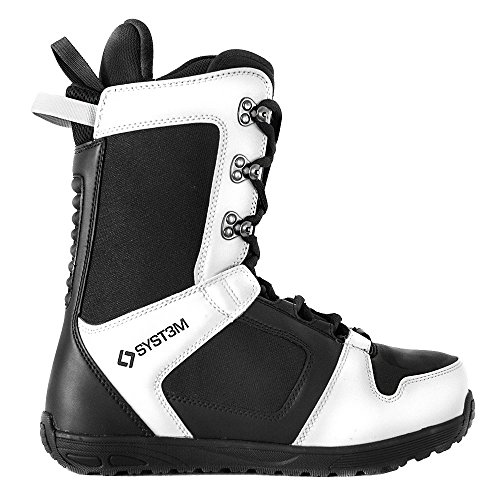
Traditional Lacing: Traditional lacing to allow riders to easily keep the boot tight in all the right places. Traditional laces allow riders to tighten each section of the boot separately for the perfect fit. Special smoothed metal hooks help hold your laces tight for the entire day while eliminating abrasion to your laces making the boot last even longer!

Sequence BOA Fit System features two unique lace paths for an adjustable, snug, and even fit

UNILITE OUTSOLE FOR LIGHT GRIP - With unmatched comfort and a playful medium flex, the Control BOA snowboard boot is a team and fan favorite; Featuring the new UniLite outsole, these men's snowboard boots provide enhanced board feel at each and every turn
Ensuring Proper Fit to Avoid Drag
Guaranteeing proper fit is crucial for snowboarders seeking to minimize drag and maximize performance on the slopes. Selecting the right snowboard size based on weight notably aids in drag reduction, allowing for ideal board stability and pressure distribution. A board that is too short for a rider’s weight may sink excessively, creating friction and drag, while one that is too long can impede agility and acceleration. Correct board length allows for maximum edge contact, enhancing control and creating a smoother glide. Additionally, matching board flex to rider weight confirms that the board responds adequately, preventing unnecessary drag during turns. By considering these factors, snowboarders can enjoy a performance-oriented ride that fosters confidence and connection to the sport. Furthermore, understanding the flex ratings of snowboards can help riders select a board that complements their style and weight for optimal performance.
Tailoring Your Board Width to Boot Size
Choosing the right board width is essential for peak snowboard performance, as it directly impacts a rider’s stability, control, and overall enjoyment on the slopes. Proper boot width alignment with board size is vital, ensuring an ideal 1–2 cm overhang on both heel and toe edges. This overhang consideration enables effective edge pressure, allowing riders to carve confidently without dragging their boots—an important aspect for maintaining speed and control. For riders with larger boots, such as US men’s sizes 12–16, extra-wide boards are necessary, while lower-profile boots can utilize narrower boards without compromising performance. Regularly evaluating fit, especially when changing boot models, helps enhance riding experience and equipment longevity, setting riders up for success on any terrain.
Recommended Products
![Arkorus [NEW] (4 PCS) Snowboard Wall Mount Storage – Edge-Safe Snowboards Hanger, Modern Floating Vertical Rack, Clip Hook Holder to Securely Store and Display Boards, Gear Organizer](https://m.media-amazon.com/images/I/31T0zkyAgtL._SL500_.jpg)
[Mount & Display Your Snowboards – Clean, Secure Floating Design] Easily mount and display vertically up to [2] snowboards per set (4 rubber mounts included) with a modern floating look. Designed to hold your boards securely using gravity and edge support—no bulky racks or complicated systems.

100% Other Fibers
Compatible with Most People: Bring COOLOO Ski Goggles out with your Family and Friends for outdoor sports! They fit men, women, teens and youth. Extra long elastic strap ensures great helmet compatibility with all helmets.
Adjusting Size Based on Riding Style and Terrain
When optimizing snowboard size for riding style and terrain, it becomes essential to recognize how these variables can significantly enhance overall performance on the slopes. Riders should consider their riding preferences; for cautious riding, reducing the board size by 2 cm offers stability, while aggressive riders can add 2 cm for better speed and edge control. Terrain adaptations also play a vital role: a standard board suits groomed runs, but all-mountain riders benefit from an extra 2 cm, and powder enthusiasts need an additional 4 cm for improved floatation. Park and freestyle terrain riders should opt for shorter boards, ensuring agility and quick turns, while backcountry enthusiasts require longer boards for enhanced stability and control.
Sizing Nuances Based on Weight Ranges
Selecting the appropriate snowboard size involves more than just personal preference; it heavily depends on the rider’s weight, which plays a significant role in determining the ideal length for performance and comfort. Weight categories guide snowboard length, with lighter riders up to 80 lbs using boards 132-137 cm long, while heavier riders 185-215+ lbs typically opt for boards 160-165 cm or longer. Weight-specific sizing allows for performance tweaks, ensuring rider compatibility. Height adjustments also impact choices, as taller lightweight riders may benefit from longer boards, while heavier shorter riders require slightly shorter boards for control. Additionally, boot size influences board width, highlighting the importance of pairing proper length with suitable waist widths to enhance maneuverability options and stability.
Key Measurements to Consider Before Buying
Before diving into a snowboard purchase, understanding key measurements plays a pivotal role in achieving the best fit and performance on the slopes. The snowboard length should ideally reach between the rider’s shoulder and nose, while weight considerably influences the appropriate size for peak stability. A board’s waist width must align with boot size to eliminate toe and heel drag, enhancing rider posture and control during turns. Wider boards suit larger boots, preventing loss of balance and maintaining edge precision. Additionally, individual riding styles, from freestyle to all-mountain, dictate board length choice, with agility sought in shorter boards and stability in longer models. Analyzing these critical factors guarantees a harmonious connection between rider and snowboard, fostering a sense of belonging on the snow.
Frequently Asked Questions
Can I Ride a Snowboard That’s Too Short for My Weight?
Riding a board akin to a tightrope, it proves tricky if too short for one’s weight. While short board benefits include maneuverability, riding stability effects often lead to falls and fatigue, hindering the joyful experience on slopes.
How Does My Riding Style Affect Board Size Selection?
Riding style greatly influences board size selection. Freestyle preferences typically favor shorter boards for agility, while carving techniques benefit from longer boards that provide stability and control, enhancing the experience on varied terrains and fostering community engagement.
Is It Necessary to Try Multiple Boards Before Buying?
Seeking the right snowboard necessitates board testing and exploring brand differences; attempting multiple models enhances comfort and control, allows for refinement of personal preference, and ultimately fosters a sense of belonging within the snowboarding community.
What Should I Consider if I’m Between Two Size Ranges?
When between size ranges, one should consider flexibility preference and height consideration. A shorter board may enhance maneuverability, while a longer one provides stability. Ultimately, personal riding style and comfort determine the best choice.
Can I Use a Wide Board if My Boots Are Smaller?
Using a wide board with smaller boots can lead to challenges—boot sizing becomes essential, and board floatation may compromise control. Riders should approach this choice carefully, considering the impact on their performance and safety.

