As an Amazon Associate, we earn from qualifying purchases. Some links on this site are affiliate links at no extra cost to you. Our recommendations are based on thorough research and editorial judgment.


How Do You Select the Right Snowboard Width for Your Boot Size?

To select the right snowboard width for a rider’s boot size, it’s important to achieve balance and control on the slopes. Generally, a boot size over 10 requires a waist width of 25–25.9 cm for mid-wide boards, while sizes 5–9 necessitate widths around 23.9–24.4 cm. A maximum toe and heel overhang of 10mm enhances edge responsiveness. Additionally, personal riding style and snow conditions play significant roles in width selection. Exploring various models and sizes can enhance performance further. Discover more essential tips for optimizing fit and choice.
Key Takeaways
- Measure your foot length in millimeters to determine your boot size and width requirements accurately.
- Consult specific manufacturer sizing charts since snowboard boot sizes can vary across brands and models.
- Aim for an ideal boot overhang of no more than 10mm for optimal edge control and responsiveness.
- Choose board width based on your boot size: wider boards for larger boots enhance stability and prevent drag.
- Consider your riding style; freestyle riders prefer narrower boards, while all-mountain and powder enthusiasts benefit from mid-wide to wide options.
Importance of Snowboard Width
You may be interested


When selecting a snowboard, width is a critical factor that can greatly enhance the riding experience. Proper board width is essential for stability and control; it guarantees that a rider’s boots fit comfortably without excessive overhang, which can lead to toe and heel drag. This drag diminishes performance adaptability, causing loss of control, particularly in sharp turns. Conversely, a well-matched width boosts confidence, allowing for faster, more precise edge-to-edge shifts. For riders with larger boots, a wider board facilitates aggressive carving while reducing the risk of catching an edge. Ultimately, selecting the right width harmonizes boot width with performance needs, guaranteeing an enjoyable journey that fosters a sense of belonging in the snowboarding community. Additionally, ensuring that your snowboard accessories, such as ski boot horns, are compatible can enhance your overall riding experience.
Understanding Boot Size Variations

To navigate the complexities of snowboard boot sizing, it is essential to recognize how variations across brands and models can greatly impact fit and performance. Boot size differences stem from unique sizing systems such as Mondopoint, which measures foot length in millimeters, while US, UK, and EU sizes can vary considerably. Direct foot measurement techniques provide the best accuracy, ensuring enthusiasts select the appropriate size. In addition, levels of flexibility, liner materials, and boot volume can alter fit perception even if the size appears consistent. Trying on multiple models is essential, as even the same brand might feel different, ultimately leading to better control and enhanced riding experiences. For online shoppers, flexible return policies are invaluable in managing sizing uncertainties. Additionally, understanding the importance of customizable fit options can significantly enhance comfort and stability during rides.
Snowboard Width Guidelines for Men
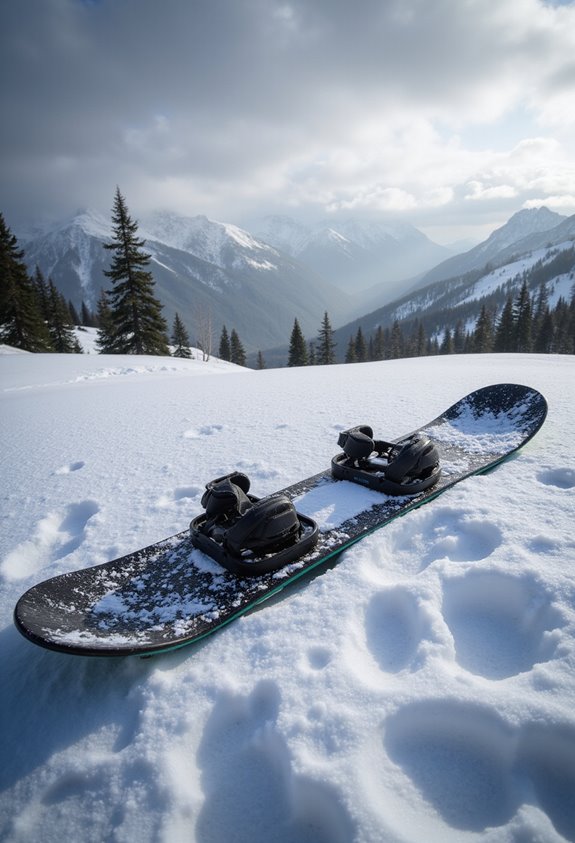
Snowboard width is directly influenced by the size of the rider’s boots, making it a key consideration following the selection of appropriate footwear. For men, understanding boot size ranges is vital: boots size 5.5 and under require widths of approximately 17.9–22.1 cm, while sizes 10 to 11.5 align with mid-wide boards at 25–25.9 cm. It’s important to factor in the boot profile, as lower-profile boots allow for ideal overhang of 1–2 cm, preventing drag without compromising board width tolerances. Most men’s boards fall into regular or mid-wide categories, so sizing accurately guarantees balance, control, and stability. Wide snowboards enhance overall riding performance and transform everyday outings into exceptional mountain adventures.
Recommended Products

Rider Type: All-Mountain/Freeride

Twin Shape is perfectly symmetrical for a balanced ride whether you're riding regular or switch; Twin Flex is perfectly symmetrical from tip to tail

The perfect, easy riding, versatile, performance board
Snowboard Width Guidelines for Women

Selecting the appropriate snowboard width is crucial for optimizing a woman’s performance on the slopes, as it assures a perfect fit that maximizes control and maneuverability. Women’s boards are typically narrower, aligning with smaller boot sizes—those between 5–9 (US) typically need a waist width of 23.9–24.4 cm, while sizes 8–11 require 24.4–25.1 cm. A slight boot overhang of 1–2 cm guarantees effective edge control, whereas too much or too little can compromise stability. Always consult manufacturer-specific sizing charts, as widths can vary considerably across models. Pay attention to riding styles too, as freestyle enthusiasts may prefer narrower boards for agility, while freeriders might favor slightly wider options for stability in varied snow conditions. Additionally, considering the flexibility and responsiveness of the snowboard can further enhance the overall riding experience.
Recommended Products

Radius: 17 m at 167 cm length

A1 Core - Sustainably harvested bamboo, aspen, and paulownia combine to deliver a snappy and responsive feel. Our A1 and S1 cores are backed by a 5-year warranty against breakage.

Snowboard Width Guidelines for Children

As children grow, finding the right snowboard width becomes increasingly important, especially as they begin to develop more specific riding styles. For young riders under 12, boot fitting is less critical, with narrow boards being typically sufficient. However, once children reach shoe sizes beyond EU 36, accurately checking the board waist width against the boot sole length is essential to avoid toe and heel drag, which can hinder performance and safety. During late childhood and early adolescence, parents should prioritize fit by measuring the child’s actual boot length, ensuring a snug fit with minimal overhang. This attention to detail supports control and maneuverability, helping young snowboarders enjoy their time on the slopes while fostering a sense of belonging in the snowboarding community. Additionally, choosing the right snowboard width can significantly impact flexibility and stability, enhancing the overall riding experience.
Recommended Products

Twin Shape is perfectly symmetrical for a balanced ride whether you're riding regular or switch; Twin Flex is perfectly symmetrical from tip to tail
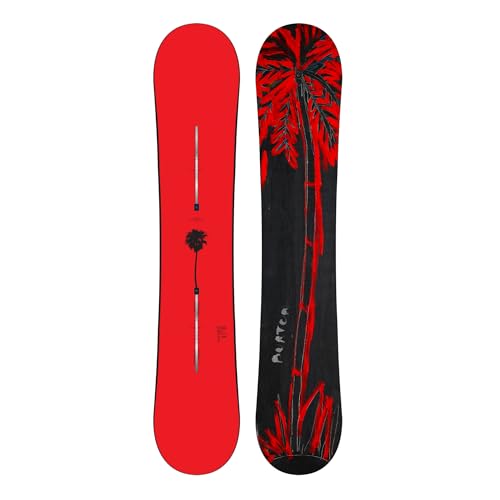
Twin Shape is perfectly symmetrical for a balanced ride so you can spin and stomp with outstanding stability whether you're riding regular or switch
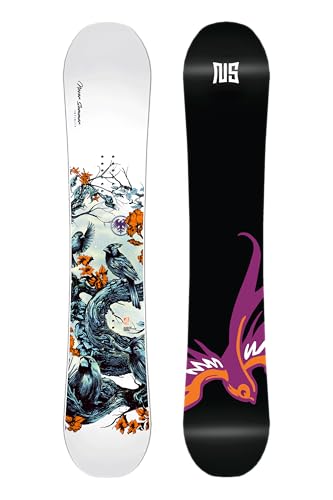
Core: AllPop Wood Core
Recommended Boot Overhang for Optimal Fit
How can a rider guarantee that their snowboard provides the best performance and control? An essential aspect is ensuring proper boot overhang, which, ideally, should be limited to a maximum of 10mm—5mm on both the toe and heel sides. This balanced overhang enhances snowboarding performance by allowing for improved turning responsiveness and edge control, while also minimizing drag. Adjustable bindings play an important role, enabling users to calibrate fit based on varying boot sizes and profiles. Riders should consider their stance and utilize specialized measuring tools to achieve the right overhang. Achieving this ideal fit not only enhances the riding experience but also fosters a greater sense of belonging within the snowboarding community. Additionally, understanding proper boot overhang is crucial for optimizing performance on different snow conditions.
Recommended Products

𝐋𝐈𝐆𝐇𝐓 𝐒𝐋𝐈𝐏-𝐒𝐓𝐄𝐏 – Assisted entry design speeds up in/out while keeping a classic strapped feel.

System MTN Men's Snowboard Package : System's MTN complete snowboard package comes with their best selling all mountain MTN snowboard, their brand new step in rear entry MTN bindings and their classic APX boot for all mountain dominance!

𝐀𝐔𝐓𝐎𝐌𝐀𝐓𝐄𝐃 𝐄𝐍𝐓𝐑𝐘 – Hands-free style engagement speeds up laps without sacrificing locked-in support.
Effects of Too Narrow Boards
When considering the effects of too narrow snowboard boards, one must recognize that while slimmer profiles can enhance agility and quicker edge-to-edge shifts, they can also introduce significant performance issues. Riders with larger feet often face pronounced boot overhang on narrow boards, leading to toe drag during deep carves, which poses serious safety concerns as it heightens the risk of losing control or falling. This performance limitation further necessitates altering carving angles or stance width to compensate, reducing overall enjoyment. Although narrow boards provide lighter designs for maneuverability on groomed runs, they sacrifice stability, especially at speed. Consequently, selecting a snowboard that balances width with boot fit is essential to enhance confidence and performance on the slopes. Additionally, weather-resistant designs are critical to ensure safety and effectiveness in unpredictable conditions.
Effects of Too Wide Boards
Selecting a snowboard that is too wide can lead to several performance drawbacks, even as some stability and float advantages are gained. Wider boards often present technical challenges, such as reduced edge-to-edge responsiveness, requiring more effort to shift during turns, which detracts from carving precision and maneuverability. The increased surface area causes greater drag, ultimately slowing ride speeds and demanding more energy to maintain momentum, especially on groomed runs. Riders may experience riding disadvantages in tight terrain, as these boards tend to feel less agile, making progression more difficult. Additionally, the added torsional stiffness can hinder flex and control, impacting overall ride quality. As a result, careful consideration of width is essential to balance stability and responsiveness, especially since adjustable features can enhance fit and comfort during snowboarding activities.
Measurement Tips for Selecting Snowboard Width
Accurate measurement plays an essential role in selecting the right snowboard width, as it directly impacts performance and comfort on the slopes. Enthusiasts can employ effective measurement techniques such as using a ruler to record boot sole length and testing boot fit on prospective boards to assess edge overhang accurately. Ideal overhang should be between 1 and 2 centimeters, allowing for maximum leverage during turns. Fitting assessments should also consider boot profiles, as lower-profile boots can enhance overall board compatibility. Utilizing manufacturer charts and online calculators provides an additional layer of precision, ensuring riders choose a board that complements their unique needs. Emphasizing these techniques helps both novice and seasoned riders embrace a more focused and enjoyable snowboarding experience. Additionally, ensuring compatibility with various snowboard types can further optimize performance and enhance the overall riding experience.
Recommended Products

Imprint 2 Liner with 3M Thinsulate Insulation, with Lock-Up Cuff, Velcro Closure and Man Fur

Dual Zone Boa System Featuring Coiler Technology, Powered by Burton Exclusive New England Ropes with the Boa Guarantee
Imprint 2 Liner with 3M Thinsulate Insulation, with Lock-Up Cuff, Velcro Closure and Man Fur
Impact of Rider Height and Weight
The dynamic interplay between rider height and weight greatly influences the selection of a snowboard’s dimensions, particularly regarding length rather than width. While taller riders often benefit from longer boards for enhanced rider agility, this does not directly affect width selection. Instead, snowboard width is primarily determined by boot size, ensuring ideal weight distribution to prevent boot drag. Weight plays a more significant role in determining board length; heavier riders typically need longer boards to maintain balance and control. Experience has shown that proper weight distribution is essential for effective turns, especially in varied conditions. Hence, understanding the relationship between height and weight supports riders in making informed choices that elevate their snowboarding experience. Additionally, selecting the right snowboard width can significantly impact overall skiing performance, ensuring comfort and control during maneuvers.
Influence of Snowboarding Style on Width Choice
When choosing a snowboard, the rider’s individual style fundamentally shapes the decision regarding width, as different riding approaches require distinct board characteristics for ideal performance. Freestyle riders often favor narrower boards, which enhance maneuverability and promote freestyle flexibility for tricks and jumps. Conversely, those embracing all-mountain stability tend to select mid-wide to wide boards, which provide balance and control across varying terrains. For powder, wider boards excel at improving flotation, minimizing drag. Additionally, carving enthusiasts prefer narrower options, allowing for sharper turns. Ultimately, selecting the right width tailored to one’s style not only enhances performance but also fosters a sense of belonging within the snowboarding community, making each ride a shared experience of joy and adventure.
Adjusting for Snow Conditions
Adjusting snowboard width based on snow conditions is crucial for optimizing performance and enjoyment on the slopes. For soft, deep powder, wider boards enhance floatation, minimizing sinking and making edge control less essential. A slightly increased width can compensate for this reduced grip, allowing riders to enjoy the fluffy snow with greater ease. Conversely, narrower boards excel on hardpack or icy surfaces by promoting edge engagement, which is critical for quick shifts. Maintaining boot overhang within 1-2 cm is necessary on narrower boards to prevent dragging during sharp turns. These snow condition adjustments not only shape the board’s performance but can also enhance rider stability and control, ensuring an enjoyable and smooth experience in varying environments.
Personal Preferences in Width Selection
Understanding what width works best for individual riding styles can greatly impact performance on the slopes. Snowboarders often develop custom width preferences based on their experiences and the specific terrains they ride. Riders who favor aggressive styles may lean towards narrower boards for ideal carving, while those in freeride may prefer wider boards for enhanced stability and floatation in powder. Also, personal board aesthetic choices can influence decisions, as riders seek a balance between functionality and style. Factors like height, weight, and skill level also play essential roles, ensuring the snowboard fits precisely with their boot size and enhances comfort during long runs. Ultimately, selecting the right width fosters a more enjoyable ride, solidifying their sense of belonging in the snowboarding community.
Testing Boot-to-Board Fit
Testing the fit of boots to the snowboard is a vital step that follows the quest for personal width preferences, as an incorrect fit can hinder performance regardless of board size or style. A boot fit should feel comfortably snug, ensuring firm contact between the liner and key areas of the foot, ankle, and shin for optimal energy transfer. Engaging in dynamic movement tests, such as squatting and rocking side-to-side, verifies stability and minimizes foot movement. Additionally, centering the boot on the board is essential, eliminating the risk of toe or heel drag. Each adjustment enhances control, power transfer, and overall comfort, allowing riders to enjoy their time on the slopes without discomfort or fit issues.
Common Mistakes in Width Selection
Selecting the right snowboard width is critical for achieving an ideal riding experience, yet many riders make common mistakes that can adversely affect performance. One prevalent error involves ignoring the difference between underfoot and topside width, which can lead to an underestimation of boot overhang. Failing to account for boot profiles also results in selecting a board too narrow, increasing the risk of heel or toe drag. Additionally, overlooking the impact of binding angles can create challenges during turns, especially for those with duck stances. Some riders mistakenly generalize width selection based on height rather than boot size or weight, further complicating their fit. Ultimately, choosing the right width tailored to riding style and boot dimensions is essential for maximum control and enjoyment on the slopes.
Frequently Asked Questions
Can I Use a Snowboard From Last Season With Different Boot Sizes?
Using a snowboard from last season with different boot sizes may be possible, but boot compatibility is essential. Statistically, nearly 30% of riders experience reduced season longevity due to mismatched equipment, impacting both comfort and performance.
How Often Should I Reassess My Snowboard Width as My Skills Improve?
As skills improve, it’s crucial to reassess snowboard width regularly, typically after significant skill progression. Equipment adjustments guarantee peak performance, enhancing the overall riding experience and fostering a sense of belonging within the snowboarding community.
Do Bindings Impact the Choice of Snowboard Width Significantly?
Bindings greatly impact snowboard width choice, as binding adjustments can lead to performance effects. Proper alignment enhances control and reduces drag, fostering a sense of belonging among riders who seek an ideal fit for their unique riding style.
What if My Boot Size Falls Between Standard Snowboard Width Categories?
When boot sizes fall between categories, hybrid board options offer boot size adaptability. Approximately 70% of riders find ideal performance with boards that adjust width, ensuring comfort and better control on various terrains while maintaining a sense of community.
Are There Specific Brands Known for Better Width-To-Boot Size Compatibility?
Certain brands like Never Summer and Burton are renowned for their width-to-boot size compatibility. They offer narrow boards for smaller sizes and wide boards for larger feet, ensuring ideal performance and a sense of belonging on the slopes.


