As an Amazon Associate, we earn from qualifying purchases. Some links on this site are affiliate links at no extra cost to you. Our recommendations are based on thorough research and editorial judgment.


What Makes Powder Skis Different From All-Mountain Skis?

Powder skis differ from all-mountain skis primarily in their design and intended use. With wider tips and tails, softer flex, and longer lengths, powder skis excel in deep snow by enhancing flotation and maneuverability. In contrast, all-mountain skis feature a narrower waist, stiffer flex, and a rocker-camber-rocker profile for versatile performance across various terrains. This makes all-mountain skis perfect for groomed runs and varied conditions. For more insights on ski selection, preferences, and performance, check further details.
Key Takeaways
- Powder skis have wider tips and tails for enhanced flotation in deep snow, while all-mountain skis feature narrower waists for versatility across different terrains.
- Powder skis excel in off-piste conditions, offering superior performance in deep powder compared to the versatile capabilities of all-mountain skis.
- A softer flex in powder skis allows easier turn initiation but sacrifices edge hold, while all-mountain skis have a stiffer flex for better control.
- Powder skis are typically longer, improving stability at high speeds, whereas all-mountain skis are closer to skier height for better agility on turns.
- Powder skis are suited for advanced or expert skiers, while all-mountain skis accommodate all skill levels, making them more user-friendly.
Design and Shape Differences
You may be interested



In the world of skiing, understanding the design and shape differences between powder skis and all-mountain skis is essential for selecting the right equipment for varying snow conditions and skiing styles. Powder skis feature wider tips and tails, typically ranging from 140 to 155 mm at the tip, enhancing snow flotation and providing impressive shape dynamics for deep snow performance. In contrast, all-mountain skis boast narrower waists between 85 and 100 mm, striking a balance in design aesthetics for versatility across varied terrains. The rocker profiles differ too; powder skis prioritize deep snow maneuverability with an earlier rise, while all-mountain skis integrate a rocker-camber-rocker design to maintain edge hold on groomed runs. Understanding these aspects helps skiers connect with their ideal ski experience. Additionally, selecting skis with wider waist widths can significantly enhance flotation in deep powder conditions.
Recommended Products

Warm Material:Snowboard bibs are made of 100% polyester fiber,with excellent heat preservation and moisture absorption and sweat winking performance, providing you with enough warm comfort. 600 Denier Oxford Scuff Guards Reinforced ankle, leg guard and hem guards holds up against the daily wear and tear. Anti-static fabric, move freely during skiing.

PREMIUM QUALITY FABRIC: The snowboard pants fabric is made of 100% nylon and the lining is made of 100% polyester, which is soft and comfortable and can keep you warm in cold weather;

PREMIUM QUALITY FABRIC: The snowboard pants fabric is made of 100% nylon and the lining is made of 100% polyester, which is soft and comfortable and can keep you warm in cold weather;
Intended Terrain and Snow Conditions

When selecting the right ski for varied mountain adventures, understanding intended terrain and snow conditions is essential, as different skis are engineered for specific environments. Powder skis shine in deep powder and off-piste settings, featuring wider waists that facilitate superior powder performance, allowing skiers to float effortlessly on the soft snow. Conversely, all-mountain skis offer versatility across different terrains, excelling on groomed runs while still handling occasional powder with ease due to their narrower waists. These skis are designed for skiers seeking balanced performance in variable conditions, making them ideal for those who enjoy a mix of rugged and groomed terrain. Ultimately, the choice relies on whether one prioritizes the thrill of powder skiing or the all mountain versatility that blends various skiing experiences. Additionally, ski design is influenced by terrain; longer skis offer stability on groomed slopes while wider waists enhance flotation in powder for off-piste adventures.
Flexibility and Handling Characteristics

Flexibility and handling characteristics play an essential role in determining the skiing experience, as they directly influence how a ski performs on different terrains. Powder skis typically feature a softer flex, enhancing flotation in deep snow and allowing for smooth turns over uneven surfaces. This flexibility can make turn initiation easier, but it often sacrifices edge hold on hardpack. In contrast, all-mountain skis possess a stiffer flex, which improves control and responsiveness on variable conditions, demanding a bit more effort to turn but offering greater stability at speed. The combination of binding types and flex patterns markedly affects performance metrics, ensuring that skiers choose equipment tailored to their preferred terrain and skiing style. Additionally, understanding natural stance technology can help skiers optimize their balance and performance on different types of skis.
Ski Length Considerations

Selecting the right ski length is essential for optimizing performance and enhancing the skiing experience across different terrains. For example, powder skis are often 7-10 cm longer than all-mountain skis, enhancing floatation in deep snow through increased bearing surface. This added length, paired with wider widths, allows skiers to navigate powder more effectively, providing stability during high-speed runs. In contrast, all-mountain skis typically range closer to skier height, promoting agility for quick turns on groomed runs and varied terrain. Skiers should consider their height, weight, and preferred skiing style when determining ski length, as those who favor aggressive skiing or powder will generally opt for longer skis, while beginners might prefer shorter options for ease of control. Additionally, regular updates to logs of ski maintenance can ensure optimal performance and longevity of the equipment.
Skill Level Suitability
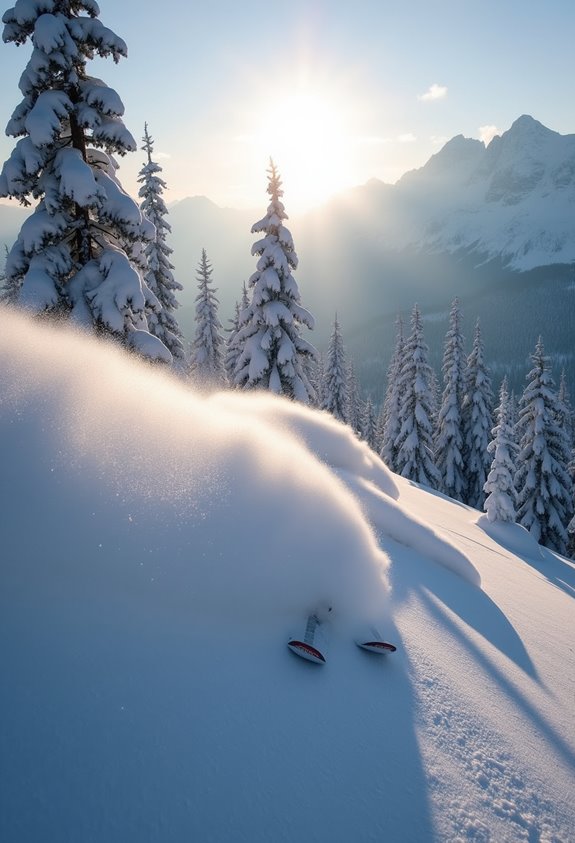
Choosing the right skis based on skill level is critical for ensuring a safe and enjoyable experience on the slopes. Powder skis cater primarily to advanced or expert skiers, requiring advanced techniques to handle their wider platforms and variable conditions, while often presenting beginner challenges due to decreased edge grip on hard-packed snow. Conversely, all-mountain skis are designed for all skill levels, offering a gentler learning curve with forgiving performance on both groomed runs and light powder. Many recreational skiers, including beginners and intermediates, prefer all-mountain skis for their versatility, allowing effective exploration across various terrains and conditions. As skiers improve, shifting to powder skis may enhance their skills but necessitates specific practice and comfort in deep snow environments. Additionally, investing in snowboard maintenance tools can ensure optimal performance and prolong the lifespan of your equipment.
Performance Trade-offs
When skiers consider the differences between powder skis and all-mountain skis, understanding performance trade-offs becomes central to their decision-making process. Powder skis, with their wide waists and rockered tips, enhance flotation in deep snow but sacrifice edge grip and speed stability on hardpack surfaces. This reduced edge contact length can make these skis feel sluggish during quick shifts, especially on firmer terrain. In contrast, all-mountain skis, featuring narrower waists and camber underfoot, offer superior grip, allowing for better performance on groomed runs and icy conditions. While powder skis shine in soft, deep snow, all-mountain skis provide a balanced blend of maneuverability and adaptability across mixed snow conditions, making them a more versatile choice for varied skiing experiences. Additionally, skiers should consider how temperature ratings of their gear can impact comfort and performance in extreme weather conditions.
Recommended Products

Modern Carving—Beginner to Intermediate downhill men & womens skis with bindings; All mountain skis for men & women bring the confidence to discover the whole resort

【Multiple Wearing Methods】Can be worn as opened or closed balaclavas, face masks, neck gaiters, scarfs, bandanas, helmet liners, headbands and even wristbands

OTG (Over-The-Glasses) Design: Ski goggles that fits over glasses. Suitable for both adults and youth
Ideal Use Cases for Powder Skis
For skiers seeking to maximize their experience in deep snow, powder skis represent an ideal choice, especially in environments characterized by abundant soft snow. These skis excel in fresh powder, untracked backcountry areas, and heli-skiing ventures, where their wide, rockered design enhances floatation and maneuverability. Powder skiing techniques, such as maintaining a centered stance and evenly weighting both skis, are essential for effectively traversing deep conditions. The design specifications—typically over 105 mm underfoot—allow skiers to maintain speed and stability, even in shifting snow. However, in hard-packed or icy slopes, powder skis can feel cumbersome, making them less suitable in varied terrain. Therefore, their ideal use cases are distinctly tied to regions with consistent powder conditions, particularly in North America. Additionally, the rocker profile of powder skis is specifically designed to improve performance in soft snow, making them a preferred choice for deep powder enthusiasts.
Recommended Products

Larger sized colored basket for fresh, soft or deep powder.

Cool shirt for skiers with powskis. Deep snow skier draws powder track through the snow. Show your sport and hobby outwards to skifriends or make it a gift for skiing crazy! Funny gift for women, men, mum, dad, friends, colleges, brother, sister who ski.

Ideal Use Cases for All-Mountain Skis
All-mountain skis are designed for versatility, making them an excellent choice for skiers looking to tackle a range of conditions and terrains. Ideal for exploration, these skis excel on groomed runs while offering sufficient floatation in powder, accommodating various skier preferences. The combination of moderate width and flexible construction allows them to navigate both moguls and tree lines effectively. With edge control that maintains stability on hard snow, all-mountain skis are perfect for intermediate and advanced skiers seeking performance across the mountain. Models like the Salomon QST 98 exemplify this all-mountain versatility, providing lightweight designs that enhance agility and playful movement. Priced between $600 and $1,000, these skis deliver exceptional adaptability for diverse skiing experiences. Additionally, helmets designed for skiing in parks are generally advised for safety due to increased risk of falls.
Recommended Products
Modern Carving—Beginner to Intermediate downhill men & womens skis with bindings; All mountain skis for men & women bring the confidence to discover the whole resort
Modern Carving—Beginner to Intermediate downhill men & womens skis with bindings; All mountain skis for men & women bring the confidence to discover the whole resort
【Multiple Wearing Methods】Features versatile wearing options, wearable as open or closed balaclavas, face masks, neck gaiters, bandanas, helmet liners, headbands and wristbands. Lightweight and comfortable, it is perfect for all summer occasions
Recommendations for Skiers
Choosing the right skis can dramatically enhance the skiing experience, especially when considering the diverse conditions encountered on the mountain. Skiers should evaluate their skiing styles and skill levels before making a selection. Intermediate to advanced skiers may thrive with powder skis, which offer ideal flotation and performance in deep powder, while beginners will find all-mountain skis more user-friendly for diverse terrain. Freeride skis cater to those seeking off-piste adventures but require moderate to expert skills. Additionally, skiers must prioritize gear maintenance, ensuring compatibility with bindings and proper adjustments for safety. Ultimately, selecting the right ski setup based on personal preferences and conditions encourages confidence on the slopes, fostering a strong sense of belonging within the skiing community. Proper gear maintenance is essential to ensure safety and enhance performance on the slopes.
Recommended Products

OTG (Over-The-Glasses) Design: Ski goggles that fits over glasses. Suitable for both adults and youth
Used Book in Good Condition

UNIQUE DESIGN FOR WINTER SPORTS – OBERMEYER Womens Essentials Warm Outdoor Ski Snowboard Keystone Pants in Black feature Full-Motion articulation and a contoured high back waistband for ultimate mobility.
Frequently Asked Questions
Can I Use Powder Skis for Park Skiing?
Using powder skis for park skiing limits park performance due to their design, which sacrifices versatility. These skis excel in deep snow, making them less suitable for the agile tricks and turns required in the park.
How Do Powder Skis Affect My Skiing Posture?
Does the shape of the mountain dictate the skier’s stance? Powder skis enhance ski balance and flexibility, promoting a more relaxed, upright posture, helping skiers effortlessly navigate deep snow while reducing fatigue.
What Are the Best Brands for Powder Skis?
The best brands for top powder skis include DPS, known for exceptional craftsmanship, Atomic with innovative technology, Black Crows for versatility, Salomon’s adaptability, and Rossignol emphasizing stability, all fostering a strong sense of community among enthusiasts.
Do Powder Skis Require Special Bindings?
Powder skis do not require special bindings; however, ensuring binding compatibility is essential for ideal powder performance. Properly selected bindings enhance stability and safety, allowing enthusiasts to fully enjoy deep snow experiences without concerns.
How Do I Choose the Right Ski Color or Design?
To choose the right ski color or design, one should consider current ski color trends, visibility for safety, and personal style preferences. Design considerations like adaptability for varying weather can enhance both performance and aesthetic enjoyment.