As an Amazon Associate, we earn from qualifying purchases. Some links on this site are affiliate links at no extra cost to you. Our recommendations are based on thorough research and editorial judgment.


How Do Pole Length and Basket Size Affect Different Skiing Styles?

Pole length and basket size greatly affect skiing performance across styles. Properly sized poles enhance balance and propulsion, with classic skiing benefiting from poles around 83% of a skier’s height and skating favoring those closer to 89%. Additionally, larger baskets, such as 10 cm for powder, prevent sinking and improve control in deep snow. Adjustable poles provide versatility for various conditions, essential for ideal enjoyment. Understand these elements to elevate your skiing experience and maximize your performance potential.
Key Takeaways
- Proper pole length enhances technique, balance, and energy efficiency, influencing performance in classical and skating skiing styles.
- Classical skiing typically requires poles about 83% of the skier’s height, while skating favors poles closer to 89%.
- Longer poles are preferred in double poling, especially on inclines, enhancing propulsion and efficiency.
- Basket size affects stability; standard baskets suit groomed trails, while larger powder baskets prevent sinking in deep snow.
- Adjustable poles and different basket types allow skiers to optimize performance based on terrain and snow conditions.
Understanding Pole Length in Classical Cross-Country Skiing
You may be interested


When it comes to classical cross-country skiing, the right pole length is vital for maximizing performance and efficiency on the course. Understanding pole length history reveals significant developments in measurement methods, with current standards dictating that competition poles must not exceed 83% of a skier’s height measured in ski boots. This regulation guarantees proper technique while preserving the integrity of classic diagonal striding. Historically, traditional sizing involved placing the pole under the armpit with the elbow bent at 90 degrees, a method still insightful for recreational skiers today. Advanced skiers increasingly opt for longer poles, yet adherence to the 83% rule remains essential for competitive success. Selecting the correct pole length balances comfort and propulsion, fostering a sense of belonging among athletes on the course. Additionally, many skiers benefit from understanding the importance of basket features which can significantly enhance performance in varying snow conditions.
The Impact of Pole Length on Performance in Skiing
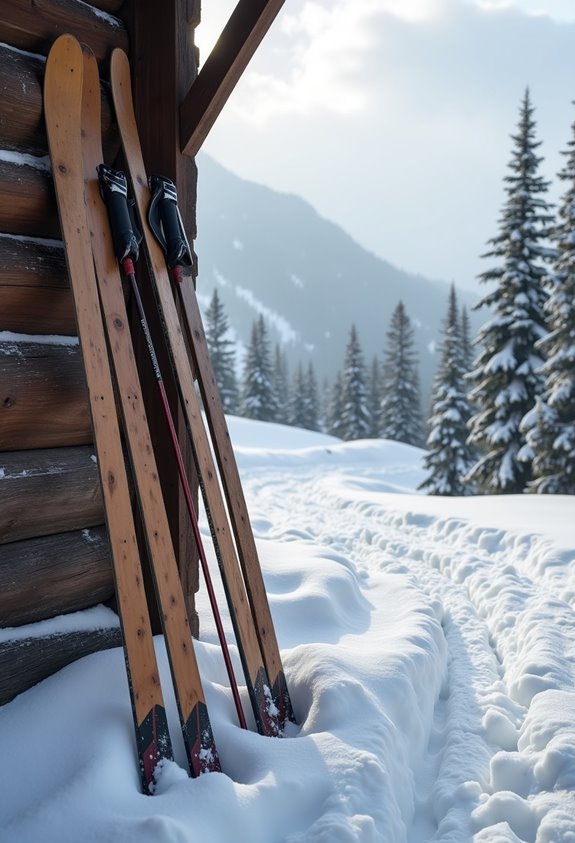
The choice of pole length plays a significant role in optimizing performance on the ski course, impacting speed, efficiency, and technique across various terrains and skiing styles. Longer poles enhance performance metrics, particularly during double poling on moderate inclines, promoting better posture and reducing oxygen consumption, which leads to increased efficiency. In contrast, shorter poles can prove advantageous in flat, high-speed conditions, facilitating effective propulsion. The ergonomic design of poles influences biomechanics, allowing for improved force application, reduced muscle strain, and lower metabolic costs. Skiers seeking the right balance can find significant benefits, whether aiming for better acceleration or maintaining stability, ensuring that their skiing experience remains enjoyable and effective. Additionally, understanding the benefits of rocker technology can help skiers choose the right equipment tailored to their performance needs.
Key Factors to Consider for Choosing Pole Length

Choosing the right ski pole length can greatly impact a skier’s performance and enjoyment on the slopes. To determine the ideal length, skiers should refer to height-based sizing charts, commonly offered by brands like Leki or REI, and consider pole adjustments to achieve the perfect fit. A proper grip is essential, with options in rubber or foam affecting comfort and handling. Additionally, achieving peak weight balance and stiffness preferences can reduce arm fatigue during long runs. Using the 90-degree elbow angle test guarantees the correct pole length, promoting efficient energy use and better posture. Ultimately, the right combination of length, grip materials, and stiffness tailored to style can elevate the skiing experience. Furthermore, features like ergonomic designs can enhance comfort and usability, making the skiing experience even more enjoyable.
Recommended Products
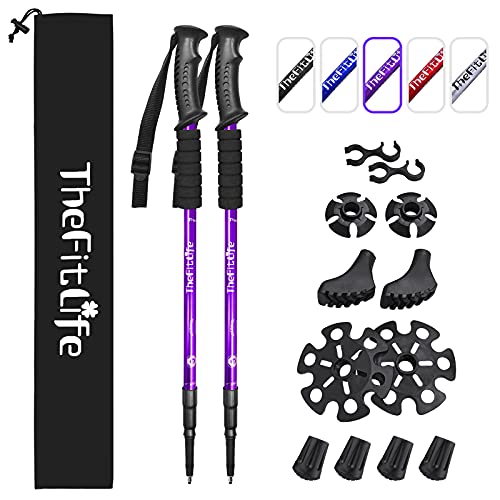
Pack-and-Go: Extends to 51.2" (130 cm), collapses to 25.6" (65 cm), and disassembles to 21.46" (54.5 cm). When separated into three sections, they fit diagonally in most 22"+ suitcases. For air travelers, check your luggage’s interior length before ordering to meet airline baggage rules. For outdoor hikers, we recommend secure poles externally using backpack loops or straps

Flipjaw Adjustment Mechanism

Compact & Portable - Our foldable hiking poles collapse down to 15 inches, fitting easily into any bag. These collapsible walking sticks for hiking are perfect for travel, offering lightweight portability for any outdoor adventure.
Differences in Pole Length Preferences Between Genders

Gender differences in pole length preferences play an essential role in optimizing skiing performance, as research indicates distinct variations in equipment selection based on physiological attributes. Men often choose longer poles, especially in classical skiing, to enhance their double-poling efficiency, aiming for maximum power output. Conversely, women typically select slightly shorter poles in classical skiing, which correlates with improved sprinting performance, showcasing the impact of tailored equipment customization. In skating styles, however, both genders prefer similar pole lengths, reflecting physiological adjustments. Such nuances highlight the importance of understanding individual preferences and ergonomic considerations for performance optimization, ensuring skiers can maximize their potential through personalized gear that fits their unique strengths and skiing styles. Additionally, the right ski wax type can significantly influence glide performance and overall skiing experience.
Pole Length Guidelines for Skating Cross-Country Skiing

Selecting the right pole length for skating cross-country skiing is essential for enhancing performance and comfort on the snow. According to competitive regulations, poles should not exceed a skier’s height with boots on, ensuring proper pole performance optimization. Beginners are encouraged to opt for slightly shorter poles to enhance their control and balance during learning, while elite skiers often gravitate towards poles that approach their full height for maximum power. Proper length selection, typically between 89% of height or chin to upper lip, is vital as it helps maintain a comfort balance, reducing strain and increasing efficiency. Additionally, understanding binding types can provide insights into how different skiing styles may require adjustments in pole length for optimal performance. Pole adjustments can be beneficial when adapting to varying terrain, ensuring a more enjoyable skiing experience for everyone involved.
Recommended Products

DURABLE plastic with metal buckle, Made in Czech Republic, 1 pair in package


Optimizing Pole Length for Skating Techniques
Optimizing pole length for skating techniques can greatly enhance a skier’s overall performance and enjoyment on the slopes. Ideal pole length considerations suggest that poles sized between 90% and 100% of a skier’s height, adjusted with boots, maximize power transfer during skating. For recreational skiers, poles around 89% to 95% of height help lower injury risks while allowing for a comfortable stance. Properly sized poles not only improve upper-body extension essential for generating speed but also guarantee efficient pole plants, reducing excessive body strain. Inappropriate lengths lead to compensatory postures that undermine efficiency. By prioritizing skating technique optimization with the right pole length, skiers can elevate their experience and performance on the trails.
Recommended Products

COMFORTABLE SKI POLES - These cross country ski poles feature adjustable padded straps and ergonomically shaped handles that keep your hands from getting tired during long ski rides

COMFORTABLE SKI POLES - These cross country ski poles feature adjustable padded straps and ergonomically shaped handles that keep your hands from getting tired during long ski rides

3*Aluminum Pole Technology: Good quality poles made from high-grade aluminum with high-tensile strength.
Variations in Pole Length by Terrain and Skiing Discipline
When considering the diverse skiing disciplines and terrain types, the variation in pole length plays an essential role in optimizing performance and enhancing the overall skiing experience. Classic cross-country poles typically reach the skier’s shoulder, while skate skiing poles are longer, hitting between the chin and upper lip for maximum propulsion. In contrast, ski touring poles are shorter to improve maneuverability on varied terrains. Adjustable poles are particularly beneficial in backcountry skiing, allowing for quick adaptations to uphill challenges and downhill stability. This flexibility not only enhances balance but also accommodates diverse conditions, making pole adjustment techniques crucial. Each type supports different skiing styles, ensuring skiers can embrace their passion confidently while enjoying the thrill of the slopes. Additionally, the use of adjustable ski poles ensures that skiers can find the perfect length for their specific needs and preferences.
Basket Size and Its Role in Different Skiing Styles
In the domain of skiing, the size of the pole basket remarkably influences both performance and overall enjoyment on the slopes. For powder skiing enthusiasts, larger baskets—up to 10 cm in diameter—prevent excessive sinking, enhancing thrust and efficiency. Meanwhile, alpine resort skiers typically favor standard 5 cm baskets, ideal for groomed trails and light snow. Medium-sized baskets accommodate variable conditions, striking a balance in versatility. With an emphasis on basket adaptability, interchangeable options allow skiers to customize pole functionality effortlessly. High-quality materials guarantee durability, preventing brittleness in extreme temperatures while maintaining performance. Ultimately, selecting the appropriate basket size can greatly enhance skiing experiences, providing stability, control, and the freedom to thrive across different skiing styles and terrains. Additionally, factors such as safety considerations for beginners should be taken into account when choosing skiing equipment to ensure a positive experience on the slopes.
Recommended Products

Larger sized colored basket for fresh, soft or deep powder.

Enhanced Traction: Our Trekking Pole Baskets feature anti-slip functionality, ensuring smooth walks on any terrain, be it muddy mountain paths or slippery snow-covered trails.

Larger sized colored basket for fresh, soft or deep powder.
Choosing the Right Basket Size for Snow Conditions
Choosing the right basket size for different snow conditions can greatly enhance a skier’s performance and enjoyment on the slopes. Standard baskets, measuring about 5 cm, are excellent for groomed trails, providing adequate support without excess weight. In contrast, powder baskets, reaching up to 10 cm, help prevent pole sinking in deep powder, guaranteeing better stability and propulsion. Skiers can benefit from interchangeable basket types, allowing for quick basket adjustments based on changing snow conditions. This adaptability not only enhances performance but also minimizes the energy lost during skiing. Whether maneuvering hard-packed trails or soft, untracked terrain, selecting the appropriate basket guarantees a smoother, more efficient skiing experience. Additionally, choosing weather-resistant materials for ski gear, including poles, can further improve durability and performance in varying snow conditions. Invest in quality basket options to elevate your skiing adventures.
Recommended Products
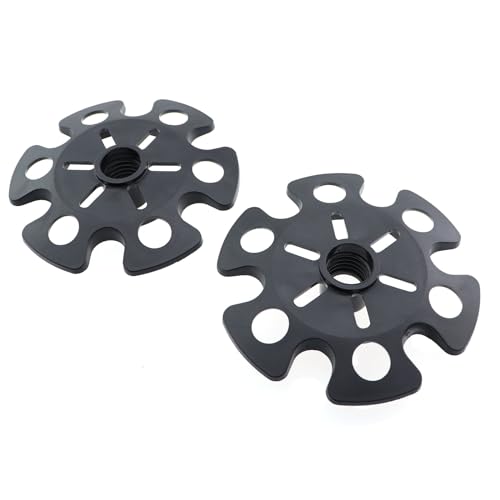
You will get 2 pieces of black hiking pole snow rests.

【Quality Rubber 】This trekking basket is made of high quality rubber, which will be lightweight and durable.Walking Stick Tips with high level of low temperature resistance, greatly improve the longlife time using of our rubber tips.These rubber tips leave minimal impact on the terrain,as they minimize terrain scarring.

【COMPLETE SEASONAL TRANSITION KIT】 This essential 8-piece bundle includes 4 high-traction rubber tips for walking sticks and 4 oversized snow baskets for trekking poles. It’s the perfect gear upgrade for hikers who need to transition seamlessly from hard-packed summer trails to soft, deep winter snow.
The Relationship Between Pole Length and Ski Length
The relationship between pole length and ski length plays a vital role in optimizing skiing performance, directly impacting efficiency, control, and comfort on the slopes. When considering pole length, it is essential to take into account ski length comparison; for instance, classical techniques typically involve poles measuring about 83.9% of a skier’s height, while skating techniques favor longer poles at approximately 89.5%. Notably, while male skiers lean towards longer poles than females in classical styles, this distinction diminishes in skating. Additionally, shorter skiers disproportionately utilize longer skis relative to their height, which enhances glide and stability. Understanding these pole length considerations can markedly elevate one’s skiing experience, addressing both performance needs and personal comfort preferences on the trails. Moreover, ski design influences pole selection, as different ski types can require varying pole lengths for optimal performance.
Recommendations for Measuring Pole Length
How can skiers guarantee they select the perfect pole length for their unique skiing style and preferences? Accurate pole length measurement is essential, and various measurement methods can help. Traditional methods measure from pole tip to the grip top, while Swix offers a modern approach that accounts for where the strap exits, making it about 4 cm shorter. The angle method, where skiers grip just below the basket, helps facilitate proper arm positioning. For a more personalized fit, using a tape measure while bent at the elbow can provide precise measurements. Height-based recommendations can serve as a good starting point, but individual adjustments can optimize comfort and performance across different terrains and skiing styles, fostering better connection and enjoyment on the slopes. Additionally, understanding snow conditions can further enhance skiers’ experiences by helping them choose the right equipment for varying terrain.
How Pole Length Influences Balance and Propulsion
While varying pole lengths can greatly influence skiing performance, particularly in striking a balance between propulsion and stability, skiers must consider their individual technique and terrain preferences to achieve ideal results. Longer poles improve skiing dynamics by allowing skiers to effectively apply propulsive forces, essential for steeper inclines. These poles promote an upright posture, enhancing endurance at the cost of some range of motion. However, using excessively long poles can strain shoulders and disrupt rhythm, highlighting the importance of prime pole position for balance. Conversely, shorter poles encourage active balance efforts, enhancing maneuverability. Skiers should familiarize themselves with different lengths to refine coordination and guarantee every skiing experience—on various terrain—is both efficient and enjoyable.
The Importance of Adjusting Pole Length for Safety and Efficiency
Adjusting pole length is essential for enhancing safety and efficiency in skiing, as proper fit directly influences balance, technique, and overall performance on the slopes. Accurate pole length not only guarantees safety improvements by reducing injury risks associated with improper posture and movement but also supports energy conservation during skiing. For example, poles that align with the skier’s height promote stability and control, lowering the likelihood of falls. Conversely, poles that are either too long or too short can lead to excessive strain and disrupt coordination. By adhering to recommendations based on skiing style, skiers can enhance their performance while minimizing fatigue and optimizing energy usage. Ultimately, the right pole length empowers skiers to enjoy their experience while prioritizing safety and efficiency.
Frequently Asked Questions
How Do I Know if My Poles Are Too Long?
To determine if poles are too long, one should observe pole fitting indicators such as exaggerated elbow angles, compromised skiing technique, inability to maintain balance, or discomfort during skiing, signaling a need for adjustment.
Can I Use the Same Poles for Different Skiing Styles?
Using the same poles for different skiing techniques is possible with adjustable length options. However, proper pole adjustment is essential to guarantee maximum performance and comfort across styles, fostering a sense of belonging among diverse skiing enthusiasts.
What Materials Are Best for Ski Poles?
In the sport of skiing, aluminum poles provide durability and affordability, while carbon poles offer lightweight performance. Plastic grips and ergonomic designs enhance comfort, fostering a sense of belonging among skiers who value stylish functionality.
How Often Should I Check My Pole Length?
Pole length should be checked regularly, particularly during seasonal changes and after height adjustments. This guarantees peak performance, fostering a sense of camaraderie among skiers who prioritize technique and safety in their skiing adventures.
Do Pole Grips Impact My Skiing Performance?
“All that glitters isn’t gold.” Proper pole grip comfort and grip durability greatly impact skiing performance, enhancing energy transfer and reducing hand fatigue, ultimately fostering confidence and connection among skiers sharing thrilling experiences on the slopes.