As an Amazon Associate, we earn from qualifying purchases. Some links on this site are affiliate links at no extra cost to you. Our recommendations are based on thorough research and editorial judgment.


How Do Fluorinated Waxes Compare to Eco-Friendly Alternatives?

Fluorinated waxes excel in speed and glide due to their hydrophobic properties, making them the go-to choice for competitive skiers. However, they raise environmental and health concerns due to PFAS, which can bioaccumulate. In contrast, eco-friendly alternatives offer similar performance with enhanced sustainability, using renewable materials and biodegradable properties. While fluorinated options tend to be pricier, eco-friendly waxes are more budget-friendly but may require more frequent applications. Discover how these differences impact your skiing experience further.
Key Takeaways
- Fluorinated waxes offer superior speed and glide, making them the preferred choice for serious athletes despite their higher cost and environmental concerns.
- Eco-friendly alternatives provide comparable performance, durability, and moisture resistance while being sourced from renewable materials, appealing to environmentally conscious consumers.
- Regulatory pressures are increasing against fluorinated waxes due to health risks and environmental impact, prompting innovations in eco-friendly options.
- Eco-friendly waxes may require more frequent reapplications, but their lower upfront costs and sustainability align with shifting consumer preferences.
- Both options cater to different priorities, with fluorinated waxes excelling in performance and eco-friendly options focusing on sustainability and health benefits.
Performance of Fluorinated Waxes
You may be interested
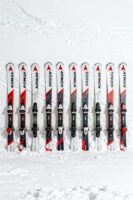


When skiers seek peak performance on the slopes, fluorinated waxes emerge as a standout choice due to their exceptional speed and glide characteristics. Renowned for fluorinated performance, these waxes excel in high-speed ski racing, particularly on moist snow where they effectively repel moisture and dirt, thereby reducing friction. Their durable barrier enhances performance even in challenging conditions, making them a preference for serious athletes. Despite their higher cost compared to eco-friendly alternatives, the benefits in glide and speed often justify the investment. These waxes shine in humid climates, with their hydrophobic properties providing a distinct advantage, enabling skiers to achieve faster times while maintaining control on the challenging terrain. Enthusiasts recognize the difference in every ride. Additionally, specific formulations cater to different snow types, which can further enhance speed and performance.
Recommended Products

The RaceWax Digital Elite Ski Snowboard Wax Tuning Kit has the same components as the regular Elite kit except that the iron has a digital temperature display. The Swix edge tool does 9 angles and sets both base and side. A 70 mm diamond stone for edge sharpening included. NOTE! 80 mm IS THE MAX LENGTH FOR THIS TOOL.

RaceWax Elite Ski Snowboard Wax Tuning Kit with a World Cup All Metal Ski Vise. Perfect kit for those needing to tune many skis/boards! The Swix edge tool does 9 angles and sets both base and side. A 80 mm diamond stone for edge sharpening included. NOTE! 80 mm IS THE MAX LENGTH FOR THIS TOOL.

EFFECTIVE: The IR waxer helps the bases to absorb more wax. You can actually watch the wax disappear into the bases as you are waxing
Composition of Fluorinated Waxes

Fluorinated waxes, known for their outstanding performance, owe their effectiveness to a complex composition that uniquely combines hydrocarbon and fluorocarbon molecules. This sophisticated chemical bonding creates a robust structure, enhancing thermal stability and hydrophobic qualities essential for skiing applications. The combination includes perfluorinated carbon chains and hydrocarbon segments, which vary in length to tailor properties such as durability and performance, with longer chains generally increasing potency and cost implications. The synthesis process replaces chlorine atoms with fluorine, resulting in stable compounds that resist degradation. Consequently, while fluorinated waxes may offer superior resistance to dirt and water, their pricing can reflect the advanced chemical engineering involved, making informed choices vital for skiers seeking both performance and value. Additionally, environmental impact considerations highlight the importance of selecting waxes that align with sustainability goals.
Environmental Impact of Fluorinated Waxes

The environmental impact of fluorinated waxes raises significant concerns, particularly due to the presence of per- and polyfluoroalkyl substances (PFAS), which are often referred to as “forever chemicals” because of their longevity in ecosystems. These substances not only resist environmental degradation but also accumulate in soil and snow, leading to localized contamination. Additionally, PFAS bioaccumulate in humans and wildlife, contributing to serious health risks and ecological disruptions. Despite regulatory actions targeting harmful PFAS, many ski wax products containing these chemicals remain on the market. This situation highlights the need for increased consumer awareness and adoption of sustainability practices in skiing, encouraging environmentally friendly alternatives that mitigate detrimental impacts on health and the environment while preserving pristine ski areas for future generations. Moreover, the construction materials used in ski designs can significantly influence the overall skiing experience and their environmental footprint.
Advantages of Eco-Friendly Alternatives

In exploring the advantages of eco-friendly alternatives for ski waxing, it becomes evident that these products not only minimize environmental impact but also enhance performance on the slopes. Eco-friendly sourcing from renewable materials, such as soy or coconut, supports sustainable agriculture and aligns with consumer preferences for greener products. These plant-based waxes are biodegradable, reducing landfill pressures and environmental contamination, while also promoting a circular economy. Additionally, they contribute to improved indoor air quality, as they burn cleaner and emit fewer pollutants than traditional synthetics. Importantly, eco-friendly alternatives exhibit a lower carbon footprint, appealing to environmentally conscious skiers. As consumers increasingly favor sustainable choices, these eco-friendly waxes embody both performance and responsible stewardship of the planet. Furthermore, the availability of eco-friendly options in various product categories reflects ongoing consumer interest in effective and responsible products.
Recommended Products

SCENT - Feu de Bois evokes fresh pine falling on curls of sandalwood & rare Virginia cedarwood. Smoky leather accords, frankincense & nuances of vanilla are tranquil and comforting.

XCMAN cross country ski,Nordic-ski double Waxing profile bench with stabile, light and skidproof leg set. Adjustable waxing profile length for skis from 120cm to 200 cm(47.2 inch to 78.7 inch).The waxing profiles detachable and Legs fold up for easy travel.

This is a dedicated waxing tool table for Nordic skiing.
Composition of Eco-Friendly Waxes

Understanding the composition of eco-friendly waxes reveals significant variations in their source materials, chemical makeup, and physical properties, all of which contribute to their performance on the slopes. Eco-friendly options like soy wax, derived from hydrogenated soybean oil, provide notable benefits such as being renewable and biodegradable. Coconut wax, celebrated for its versatility, combines a creamy texture with superior scent retention, ideal for luxury candles. Additionally, berry wax and candelilla wax offer unique properties for specific cosmetic applications, while rapeseed wax stands out for its minimal carbon footprint. Each wax type delivers distinct performance characteristics, appealing to environmentally conscious consumers. Collectively, these materials embody a commitment to sustainability and effective performance in various uses. Moreover, the importance of choosing the right ski equipment cannot be overstated, as it directly impacts the skiing experience.
Performance Metrics of Eco-Friendly Waxes
How do eco-friendly waxes measure up with respect to performance? A performance evaluation reveals that eco-friendly waxes excel in key metrics such as moisture resistance and oil barrier properties. For instance, natural wax coatings greatly decrease water absorption in paper, achieving Cobb values as low as 1.35 g/m², while also providing approximately 95% improvement in water vapor transmission rates compared to uncoated papers. Additionally, when it comes to oil and grease resistance, these waxes often achieve top ratings, suitable for packaging fatty foods. Mechanical testing shows a balance of strength and flexibility, making eco-friendly waxes a durable choice for various applications. Overall, their material sustainability aligns with performance requirements, presenting a compelling option for environmentally conscious consumers. Moreover, the innovative use of biodegradable materials in their production significantly reduces environmental impact.
Environmental Benefits of Eco-Friendly Waxes
The remarkable performance metrics of eco-friendly waxes not only highlight their functional advantages but also underscore their significant environmental benefits, setting them apart from traditional options. These waxes, such as soy and coconut variants, exhibit high biodegradability, effectively breaking down within weeks and minimizing harmful environmental accumulation. They support sustainability practices by reducing carbon footprints and minimizing pollution from wax disposal, contrasting sharply with fluorinated waxes that persist in ecosystems. Non-petroleum options contribute less to deforestation and rely on less intensive farming, conserving biodiversity. In addition, their cleaner combustion produces fewer toxins, positively impacting indoor and outdoor air quality. Embracing these eco-friendly wax alternatives not only enhances performance but also nurtures the planet, fostering a sense of belonging to a community of conscientious consumers. Furthermore, opting for sustainable products like performance waxes aligns with the growing demand for environmentally responsible choices in winter sports gear.
Health Risks Associated With Fluorinated Waxes
What health risks might skiers and wax technicians face with the use of fluorinated waxes? The exposure to fluorinated waxes raises significant health impacts, particularly related to pulmonary concerns. Users may experience polymer-fume fever, characterized by fever, throat irritation, and coughing, as a result of inhaling harmful fumes produced during the waxing process. Moreover, long-term exposure correlates with elevated levels of per- and polyfluoroalkyl substances (PFAS) in the bloodstream, which can lead to increased cholesterol and cardiovascular difficulties, independent of fitness levels. Additionally, wax technicians who frequently engage in waxing activities are particularly susceptible to these risks, as PFAS accumulation occurs not only in their bodies but also in indoor environments, highlighting the urgent need for protective measures and alternative eco-friendly wax options. Understanding UV protection features is also vital for ensuring overall safety in skiing activities.
Comparison of Glide and Durability
Evaluating ski waxes extends beyond health implications to encompass performance factors such as glide and durability, both of which dramatically affect skiing efficiency. Fluorinated waxes, known for their superior glide efficiency in wet or dirty snow conditions, utilize hydrophobic properties to greatly reduce friction, offering skiers a speed advantage. In contrast, eco-friendly alternatives have made remarkable strides, now providing competitive glide performance in various conditions, though they may still lag behind in the most challenging scenarios. Durability comparison shows that fluorinated options typically require less frequent rewaxing due to their longevity, while some biodegradable waxes might wear faster. Nevertheless, advancements in eco-friendly formulations continue to improve, promising better performance without compromising environmental integrity. Many of these eco-friendly waxes, such as biodegradable options, are designed to perform well in warmer temperatures while minimizing environmental impact.
Recommended Products
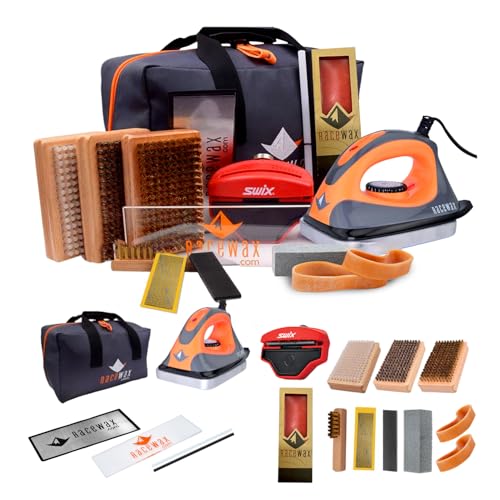
Elite Ski & Snowboard Tuning Kit - This large Cordura tool bag is packed with everything you need to complete a high-end ski or snowboard tune. Keep your ski and snowboard edges sharp and bases waxed for the best snow experience.

RaceWax Diamond Ski Snowboard Wax Tuning Kit. Everything you need to get started waxing and tuning your own skis and snowboards! Great edge tools, quality wax iron, full-size wax brush, and more!

Temperature Range: engineered for warmer snow conditions from -4 to +4 C / 25 to 39 F
Dirt Resistance Between Wax Types
In skiing, achieving peak performance involves understanding the dirt resistance of different wax types, as their effectiveness directly influences both glide and overall enjoyment on the slopes. Fluorinated waxes excel in creating a dirt-repellent barrier thanks to their carbon-fluorine bonds, which considerably reduce dirt adhesion and friction. In contrast, hydrocarbon waxes, especially softer variants, tend to attract more dirt due to their higher oil content, leading to quicker grime buildup. While eco-friendly waxes utilize ceramic or graphite additives to improve dirt resistance, they generally cannot match the hydrophobic effectiveness of fluorinated options. Regular wax maintenance is essential for all types; however, starting with a fluorinated wax can prolong a skier’s pristine glide, ensuring more continuous enjoyment on the slopes. Additionally, many eco-friendly wax options focus on sustainable manufacturing practices, appealing to environmentally conscious users.
Recommended Products

[Cleaning Kit] We have a complete waxing kit, including cleaning tools, which contain sand paper (for polishing the edge), fibertex pad, metal scraper, wax scraper (230mm/9.06inch length), Nylon/Brass/Horsehair Brush and wax apron at work.


XCMAN Complete Ski Snowboard Waxing Tuning Combo Kit with 17 model tools. Perfect kit for families or those needing to tune many skis/snowboards! The edge tool is the last tool you will ever need - The edge tuner does every angle for side/base edge- This one tool is all you need to sharpen and bevel your edges for side and snowboard edges. Dial a precise SIDE angle from 0 degree to 5 degrees(85/86/87/88/89/90 degrees).BASE angle from 0.5 degree to 1.5 degrees(0.5/1/1.5 degrees).
Temperature Adaptability of Waxes
Understanding the temperature adaptability of skiing waxes is essential for enhancing performance on the slopes, as different formulations respond uniquely to varying snow conditions. Fluorinated waxes boast impressive temperature range adaptability, with specific formulations designed for cold versus warmer conditions. For example, HF Blue excels in frigid environments, whereas HF Yellow performs in wetter, warmer snow. In addition, hardness tends to increase with lower temperatures, enhancing cold performance, but formulation variations can lead to non-linear hardness changes affecting glide efficiency. Eco-friendly alternatives aim to match these attributes, using polymers to mimic hydrophobicity without harmful PFAS. Ultimately, selecting the right ski wax hinges on understanding each product’s unique temperature adaptability characteristics and their suitability for specific snow conditions to achieve maximum performance.
Cost Analysis of Fluorinated vs. Eco-Friendly Waxes
The cost dynamics between fluorinated and eco-friendly ski waxes present essential considerations for skiers seeking ideal performance at a fair price. A cost breakdown reveals that fluorinated waxes generally carry a higher initial price due to advanced formulations, often 2–3 times that of budget-friendly eco-friendly options. However, fluorinated waxes provide longer-lasting performance, requiring fewer applications over a season, which may offset their upfront costs for serious skiers. In contrast, while eco-friendly waxes are more accessible in price and increasingly competitive in performance, they may require more frequent reapplications, impacting long-term costs. Consumer preferences are shifting toward these eco-friendly alternatives, driven by sustainability; therefore, skiers can find great value in balancing both price and performance as they wax their boards.
Recommended Products

RaceWax Universal Ski Snowboard Wax Tuning Kit. Everything you need to get started waxing and tuning your own skis and snowboards! Great edge tools, quality wax iron, and a high-quality Swix snowboard vise!

XCMAN Complete Ski Snowboard Waxing Tuning Combo Kit with 17 model tools. Perfect kit for families or those needing to tune many skis/snowboards! The edge tool is the last tool you will ever need - it does every angle for side edge- This one tool is all you need to sharpen and bevel your edges for side edges. Dial a precise SIDE angle from 0 degree to 3 degrees(87/88/89/90 degrees).Does every angle imaginable!

【All in One Kit】Snowboard wax tuning tool kit all in one: Joytutus snowboard wax kit with iron, ski wax, edge tuner, gummy stone, nylon/horsehair/brass brush, wax scraper, metal scraper, 90mm length file, 2 white & 2 black p-tex, fibertex pads, waxing apron, 2 ski brake retainers, product manual, carrying bag.
Regulatory Trends in Ski Wax Use
As states across the U.S. grapple with growing concerns over environmental and health impacts of per- and polyfluoroalkyl substances (PFAS), regulatory trends in ski wax use are becoming increasingly significant. Minnesota and California are leading the charge with state bans on ski wax containing intentionally added PFAS, effective from 2026 and 2028, respectively. New Hampshire, Colorado, and Maine are following suit, with additional measures in place for future compliance. As these regulations emerge, brands like Swix are committing to PFAS-free production to meet regulatory compliance. This evolution promotes awareness of the potential health risks linked to PFAS, ultimately guiding consumers toward eco-friendly alternatives that align with their values and safety concerns while preserving performance on the slopes.
Market Demand for Eco-Friendly Products
How much influence do consumer preferences have on the market for eco-friendly products? The growing demand for sustainable goods reflects significant shifts in consumer habits, with a remarkable 66% of global shoppers now willing to pay more for eco-friendly options. This surge is particularly pronounced among millennials, with 73% indicating readiness to alter their consumption behaviors for the sake of sustainability trends. Eco-friendly products represented 19% of U.S. retail spending in 2026, illustrating the increasing importance of environmental considerations in purchasing decisions. Remarkably, 74% of consumers favor sustainable packaging, further highlighting a strong inclination towards greener choices. As brands develop accessible, credible sustainable options, they can foster long-lasting loyalty among environmentally conscious consumers.
Future of Ski Wax Innovations
What innovations are on the horizon for ski wax technology? The future of ski wax is bright, fueled by sustainable materials that promise environmental benefits alongside performance. Companies are delving into plant-based waxes made from natural oils, while research into biodegradable options using forest residues guarantees less harmful impact on nature. Significantly, advancements in CO2 capture technology aim to lower carbon footprints in production processes. Meanwhile, fluor-free waxes have reached performance levels comparable to traditional options, making them appealing for eco-conscious skiers. Regulatory pressures against fluorinated products are not only driving these innovations but also educating consumers about sustainable choices. As the skiing community embraces these future innovations, enhanced glide and durability without toxicity become attainable, creating a fulfilling experience for all.
Frequently Asked Questions
Can Fluorinated Waxes Harm Aquatic Life?
Fluorinated waxes pose significant harm to aquatic ecosystems due to their fluorinated toxicity. These substances bioaccumulate in organisms, disrupting food chains, impairing reproduction, and posing health risks to both wildlife and humans exposed to contaminated waters.
How Do I Properly Dispose of Fluorinated Waxes?
One might muse that properly disposing of fluorinated waxes is akin to cracking a secret code. Seek local hazardous waste facilities, while considering safe alternatives to ease the burden on our beloved environment. Together, we can belong.
Are Eco-Friendly Waxes Suitable for Racing Conditions?
Eco-friendly waxes demonstrate promising performance in racing conditions, showcasing racing suitability through reliable glide and effective application. While not universally superior, advancements continue to narrow the gap, fostering growing acceptance among athletes and organizations alike.
What Certifications Should I Look for in Eco-Friendly Waxes?
When searching for eco-friendly waxes, one should keenly observe certification labels that signify sustainable sourcing, like Leaping Bunny or COSMOS ORGANIC. These guarantees foster a sense of community among conscious consumers devoted to ethical living.
How Does Temperature Affect Wax Performance Longevity?
Temperature effects markedly impact wax degradation, with higher temperatures accelerating deterioration and reducing longevity. Ideal conditions are essential for maintaining performance, highlighting the necessity of careful temperature management across various applications to guarantee lasting effectiveness.


