As an Amazon Associate, we earn from qualifying purchases. Some links on this site are affiliate links at no extra cost to you. Our recommendations are based on thorough research and editorial judgment.


How Do You Repair Scratches and Gouges in Ski or Snowboard Bases?

To repair scratches and gouges in ski or snowboard bases, one must assess the damage type. Scratches may require minimal wax, while gouges need P-Tex filling. Essential tools include P-Tex candles, metal scrapers, and base cleaners. Clean the base thoroughly, apply P-Tex in layers, and smooth the surface with a true bar. After repairs, hot wax the area for protection and longevity. Ongoing maintenance and inspections keep gear performing well. Discover effective techniques for ideal repairs and maintenance.
Key Takeaways
- Inspect the base to identify scratches or gouges, determining the depth to guide repair methods and tools needed.
- Clean the damaged area thoroughly with a metal scraper and base cleaner to ensure proper adhesion for repairs.
- For shallow scratches, apply wax, while deeper gouges require filling with P-Tex, layering incrementally to allow for shrinkage.
- Level the repaired area with a true bar, removing excess material for a smooth finish and inspect for any imperfections.
- Finish by cleaning the repair area, applying hot wax for protection, and monitor repairs regularly for signs of deterioration.
Understanding Damage Types: Scratches vs. Gouges
You may be interested



When skiers and snowboarders venture out on the slopes, they may encounter varying types of damage on their gear, specifically scratches and gouges, which differ markedly in severity and impact. Scratches are shallow marks typically made by debris, affecting only the base surface and often requiring minimal repair methods, like waxing, to maintain base integrity. On the other hand, gouges are deeper damages that can expose core materials, posing a risk for moisture ingress and requiring more extensive repair methods, such as hard P-Tex filling. Engaging in timely repairs not only preserves performance but also extends the lifespan of the gear, ensuring skiers and snowboarders alike can enjoy their time on the slopes without compromising their equipment. Additionally, ensuring proper maintenance and care of your ski gear can prevent further damage and enhance its longevity.
Assessing the Severity of Damage
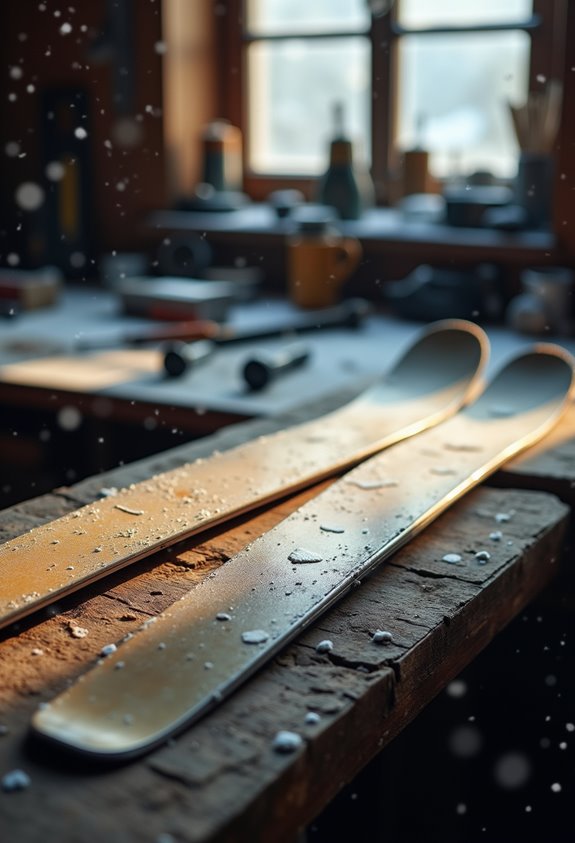
Evaluating the severity of damage on ski or snowboard bases is an essential step in ensuring peak performance and longevity of the equipment. Damage indicators such as scratches, gouges, and core shots require careful inspection techniques to determine their impact. Initially, a visual inspection identifies visible impairments, while examining the depth and edge involvement helps establish repair methods. Particularly, core shots expose crucial material and often necessitate professional intervention. It’s important to check if the base is excessively thinned or if previous repairs exist, which might affect current evaluations. By thoroughly analyzing these aspects, users can make informed decisions on whether to proceed with DIY repairs or seek professional help, aligning their choices with their skiing adventures. Additionally, understanding anti-fog technology can enhance your overall ski experience by ensuring clear visibility on the slopes.
When to Repair vs. Professionals
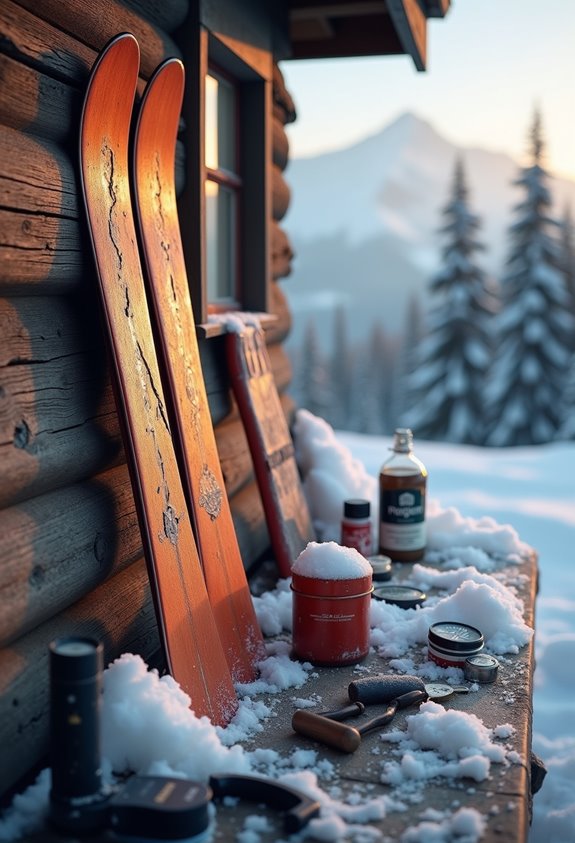
Determining whether to tackle base repairs independently or seek professional assistance can considerably impact the performance and safety of ski and snowboard gear. DIY risks include the potential for inadequate repairs that worsen existing damage, particularly if scratches penetrate deeply. Conversely, professional benefits are significant: experts possess specialized tools and techniques to effectively smooth and level the base, ensuring a durable fix. Additionally, professionals can diagnose complex issues like core shots or delamination, preventing further deterioration. If planning significant trips, entrusting repairs to experienced technicians also optimizes equipment condition, enhancing performance and safety. Ultimately, choosing between DIY and professional repairs should hinge on the damage severity and the skier’s commitment to maintaining reliable, high-functioning gear on the slopes. Furthermore, investing in quality repair kits can simplify the DIY process and yield better results.
Gathering the Right Tools and Materials
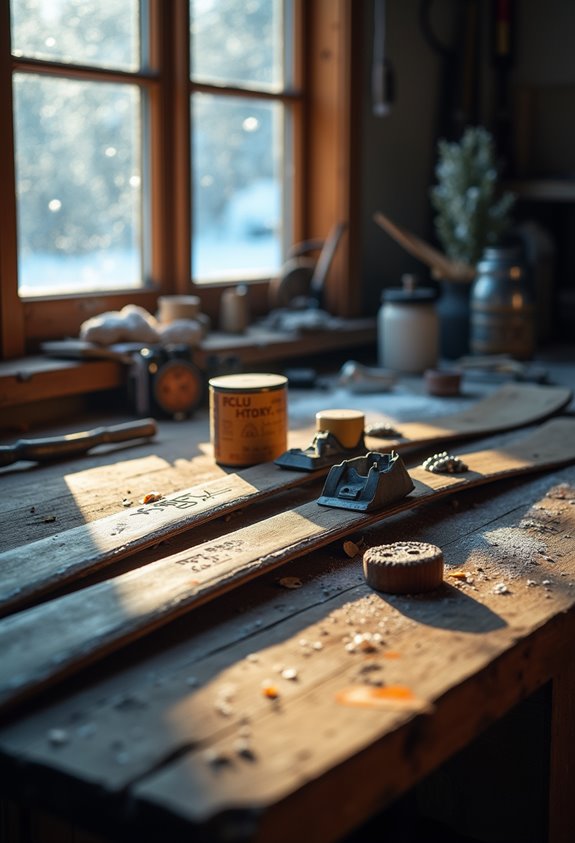
Gathering the right tools and materials is essential for anyone looking to effectively repair scratches in ski or snowboard bases, as the right equipment can considerably enhance the durability and performance of the repairs. Key tool selection includes a P-Tex candle, metal scraper, and cleaning supplies like rubbing alcohol and a bronze brush, with each item serving a distinct purpose. Material importance cannot be overstated; having P-Tex sheets and epoxy guarantees that both surface scratches and deeper gouges are properly addressed. Additionally, specialized tools like a base repair iron or repair pistol can markedly expedite the repair process. Together, the right combination of tools and materials empowers enthusiasts to maintain and prolong the performance of their ski or snowboard gear, fostering a deeper connection with the sport. Many of these tools are included in snowboard wax kits, which can provide further assistance in maintaining your gear.
Recommended Products

RaceWax Elite Ski Snowboard Wax Tuning Kit with a World Cup All Metal Ski Vise. Perfect kit for those needing to tune many skis/boards! The Swix edge tool does 9 angles and sets both base and side. A 80 mm diamond stone for edge sharpening included. NOTE! 80 mm IS THE MAX LENGTH FOR THIS TOOL.

Dual Voltage Iron Spec: This Travel Edition Slide Iron is capable of using 110-220v. Simply adjust the switch in the back from 110-220 and plug in your country adaptor. Comes set up for USA 110V. Temperature adjustable Demon Wax Iron with dual voltage option. Easy temperature dial adjusts from Low to High and allows for plenty of heat options to melt your wax just right. Min marking approx. 80c/140f Max marking approx.180c/350f

The Swix T149-50 ski vise has 50mm wide jaws to firmly grip carving skis, radial alpine skis, and downhill skis for tuning and waxing.
Preparing the Base for Repair
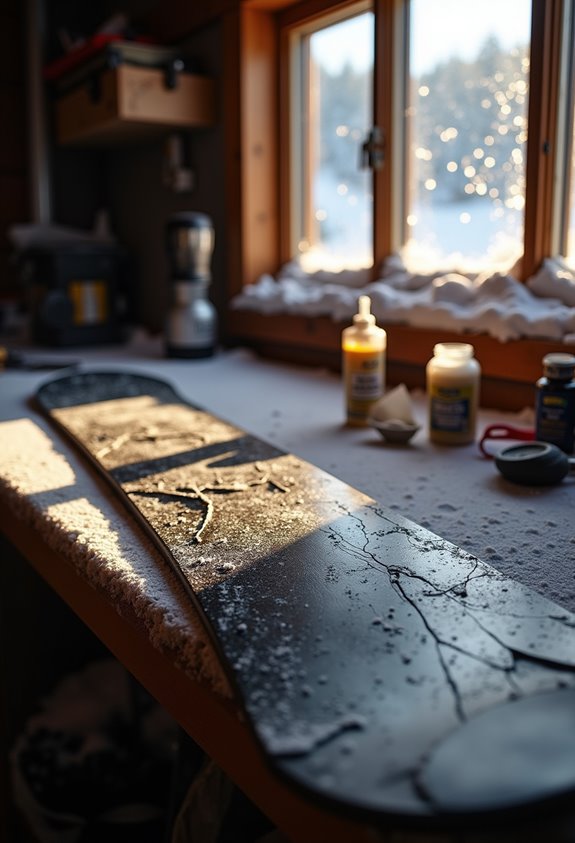
Preparing the base for repair is a critical step that often determines the effectiveness and longevity of the fix. To begin, thorough base cleaning techniques must be employed to guarantee that dirt and debris are completely eliminated; this allows repairs to adhere properly. Using a metal scraper, the damaged area can be cleaned from tip to tail, followed by a wire brush for stubborn particles. Once wax is stripped using a base cleaner, isolation of the repair area is essential. Stabilizing the ski or board will enhance the application of P-Tex, enabling a smooth and even repair. Final cleanliness is paramount, as any contaminants or moisture can inhibit proper bonding, ultimately affecting the repair’s durability and performance on the slopes. Additionally, regular maintenance, including frequent waxing, is vital for protecting ski bases and enhancing overall skiing performance.
Selecting the Appropriate P-Tex
When selecting the appropriate P-Tex for ski or snowboard repairs, it is crucial to understand the various material types available and their specific applications, as each option caters to different durability needs and repair situations. Soft P-Tex sticks are ideal for quick, travel-friendly fixes but wear out rapidly, making them suitable for short-term use. In contrast, hard P-Tex ribbons offer enhanced durability and are best applied with an iron or pistol for a stronger bond. Sintered P-Tex, while superior in longevity, isn’t typically available for DIY repairs. Clear or black options guarantee a seamless aesthetic match with your base, helping to maintain that essential, polished look. Choosing the right repair materials ultimately enhances performance and extends the life of your gear. Additionally, understanding the average annual snowfall at ski resorts like Vail can help you gauge when repairs may be necessary due to more frequent use.
Filling Deep Gouges Effectively
Filling deep gouges effectively is essential for maintaining the performance and longevity of skis and snowboards. Utilizing proper filling techniques is vital; it begins with verifying the gouge is clean and free of contaminants. The right material selection greatly enhances the repair quality, with specialist P-Tex spaghetti or round stock being preferred for precision. Multiple layers should be applied to account for shrinkage, guaranteeing a strong bond. Overfilling slightly is advisable, as this compensates for material loss during the trimming process. Additionally, a sharp scraper is necessary for achieving a smooth finish, while structured surfaces guarantee seamless integration with existing base material. These steps not only restore aesthetics but also enhance the board’s resilience against future damage, fostering a sense of community among fellow snow enthusiasts. Moreover, understanding the importance of high-density EPS padding can help improve your overall experience and safety while skiing.
Recommended Products

RaceWax World Cup All Metal Ski Vise: Jaw opens up to 105 mm. Can take wider skis if you simply clamp to the binding (instead of the sidewalls) - it is faster and easier! 50 mm wide gripping length on center jaws. Height adjustable end supports that are spring loaded.

Heavy-Duty Vise for Serious Ski Tuning – The Wintersteiger Ski Vise Pro offers unmatched holding power with 90mm jaws and a 130mm opening, making it ideal for everything from narrow race skis to wide powder skis and skis with riser plates.

RaceWax Pro Ski Snowboard Wax Tuning Kit. The edge tools are the traditional fixed angle base and side edge guides for professional tuning. The kit includes a Swix 400 grit yellow 100 mm diamond stone for routine edge maintenance and sharpening.
Techniques for Curing and Layering P-Tex
Mastering the techniques for curing and layering P-Tex is essential for ensuring a durable and seamless repair to ski or snowboard bases. The P-Tex application begins with a clean base, where removing wax and debris guarantees peak adhesion. For effective layering strategies, molten P-Tex should be applied from the edges of the gouge towards the center, with overfilling to accommodate shrinkage as it cools. Using multiple thin layers instead of one thick layer prevents cracking, enhancing repair integrity. Each layer must cool completely before adding the next, maintaining the durability of the repair. Attention to detail during application, while ensuring carbon flakes do not contaminate the P-Tex, contributes to a professional finish that proud skiers and snowboarders can appreciate. Additionally, keeping in mind the weight and durability of the materials used in the repair process can significantly impact the longevity of your snowboard’s performance.
Recommended Products

Demon United Elite Ski and Snowboard Tune Kit- Includes 3 pcs Vise, Iron, 2.25lbs of Wax, Apron and Brush Kit

Demon Charger Ski and Snowboard Tuning Kit with Iron, Wax, Brush Kit, Base Cleaner and Apron

Demon Hyper Speed Ski Tuning Kit & Snowboard Tune Kit with Iron, 1lb Wax Block & Base Cleaner And Elite X Ski and Snowboard Edge Tuner- Includes Side Edge Multi-Tool, 3 Diamond Stones, Steel File and Gummy Stone- Ski Edge Tuner and Ski Edge Tool Combo Kit
Finishing Touches: Leveling the Repair
Achieving a flawless finish on ski or snowboard base repairs requires a systematic approach to leveling that guarantees both aesthetics and performance. To start, a true bar or flat straight edge should be employed for surface inspection, checking base flatness consistently across repaired areas. Fine tuning involves using a sharp tool to carefully remove excess repair material, ensuring a smooth adjustment that enhances glide quality. Next, employing a base flattener tool with caution will help create an even surface that meets the performance needs of skiers and snowboarders alike. The final touch includes a thorough inspection for imperfections, enabling the technician to refine any lingering unevenness, thereby sealing the repair with confidence and providing the ultimate riding experience on the slopes.
Recommended Products

Snowboard Width: jaws open wide enough to hold snowboards securely during base waxing and edge work

SECURE SNOWBOARD HOLD: The Toko Board Grip 2.0 provides a stable and secure hold on your snowboard, making maintenance and tune-ups easy and efficient. Perfect for waxing, edge tuning, and other essential tasks to enhance your board’s performance.

Two-Piece Design: pair of T-bar supports hold skis or snowboards base-up on any flat workbench surface
Post-Repair Care and Maintenance
Post-repair care and maintenance play a crucial role in ensuring that skis and snowboards maintain their performance and longevity after repairs have been completed. Adhering to post repair guidelines, one should begin by thoroughly cleaning the repaired area with a soft cloth and a specialized base cleaner to remove impurities. Once dry, applying hot wax protects the base and seals minor scratches, enhancing glide. Using a rub-on wax may suffice in a pinch, but hot waxing is ideal for thorough conditioning. Additionally, regular checks of bindings and hardware not only enhance safety but also maintain equipment integrity, making maintenance routines essential for avid riders. Storage matters too; skis and snowboards should be kept in cool, dry spots away from sunlight and heat.
Monitoring Your Repair for Longevity
Monitoring the integrity of ski and snowboard repairs is vital for extending the life and performance of the equipment. Regular inspection techniques, such as visual checks after a few sessions, can help identify cracks or chips early, preventing additional damage. If necessary, enthusiasts can use magnification tools to spot micro-damage, particularly in high-impact areas like edges. Repair frequency is important; documenting any progression through photos or notes allows owners to make informed decisions on whether a re-repair or professional servicing is needed. In addition, checking the bonding and performance of repair materials under various conditions, especially colder temperatures, guarantees that repairs remain flexible and intact, enhancing durability and overall ride quality. Keeping these factors in mind will guarantee repairs last longer and maintain equipment functionality. Additionally, understanding the importance of ski length can play a crucial role in preventing further damage during repairs by ensuring the right fit for the skier’s ability and conditions.
Frequently Asked Questions
Can I Use Regular Super Glue for Ski Repairs?
Regular super glue is not suitable for ski repairs due to its brittleness and poor adhesion. Effective repair methods include marine-grade epoxy and P-Tex, which are recommended super glue alternatives for more durable, long-lasting results.
How Often Should I Inspect My Snowboard’s Base?
A snowboard’s base inspection should occur every four to six rides, allowing for a thorough damage assessment. Regular scrutiny reveals hidden imperfections, ensuring the thrill of the descent and fostering a shared passion for winter sports among riders.
What Environmental Factors Affect Base Damage?
Environmental factors influencing base damage include UV exposure, which can degrade materials over time, and varying moisture levels, which affect the snow’s abrasiveness and susceptibility to deep gouges, impacting overall performance and durability for riders.
Can I Repair My Ski at Home Year-Round?
DIY ski repairs can be tackled year-round; surprisingly, over 70% of minor damage is manageable at home. Embracing seasonal maintenance fosters camaraderie among snow enthusiasts, ensuring shared experiences on the slopes transcend seasons.
Is It Safe to Use a Heat Gun for Repairs?
Using a heat gun for repairs raises significant heat gun safety concerns. Experts recommend alternative repair techniques, like propane torches, for better control and effectiveness, ensuring repairs are durable while minimizing risk to ski or snowboard bases.


