As an Amazon Associate, we earn from qualifying purchases. Some links on this site are affiliate links at no extra cost to you. Our recommendations are based on thorough research and editorial judgment.


What Features Should You Prioritize in a Winter Sports Jacket?

When selecting a winter sports jacket, prioritize weather resistance, insulation effectiveness, and ventilation. Look for waterproof materials, like GORE-TEX, combined with breathable fabrics to manage moisture and temperature effectively. Insulation options such as down or advanced synthetics maintain warmth while handling various conditions. Functional features like articulated sleeves and adjustable hoods enhance comfort and mobility. For peak performance, consider features that balance warmth, breathability, and durability, ensuring an enjoyable outdoor experience—more insights lie ahead.
Key Takeaways
- Prioritize waterproofing and breathability to keep you dry, comfortable, and able to manage sweat during intense activities.
- Choose insulation that retains warmth in wet conditions, such as advanced synthetics or hybrid options for extreme cold.
- Look for ergonomic designs with articulated sleeves and stretch panels that enhance mobility and comfort while skiing or snowboarding.
- Check for practical features like adjustable vents, pockets, and helmet-compatible hoods that improve usability and functionality.
- Ensure durability with heavy-duty fabrics and reinforced seams, and follow maintenance guidelines to prolong the jacket’s lifespan.
Weather Resistance
You may be interested


When it comes to selecting a winter sports jacket, understanding weather resistance is vital, as it directly impacts performance and comfort in challenging conditions. Ideally, a high-quality jacket should feature breathable materials to allow sweat vapor escape during intense activities, while also providing windproof fabrics to shield the wearer from biting winds. Jackets with full waterproofing, such as those using GORE-TEX, are fundamental in heavy rain or wet snow, preventing moisture intrusion. For less extreme environments, durable water-repellent (DWR) treatments suffice. Additionally, consider seam sealing and storm flaps, which enhance overall waterproof integrity. Ultimately, the right combination of these features will guarantee that adventurers stay dry, warm, and comfortable, fostering an enjoyable connection with winter sports. Moreover, look for jackets that include functional features like helmet-compatible hoods and zippered pockets to enhance overall usability.
Insulation Effectiveness
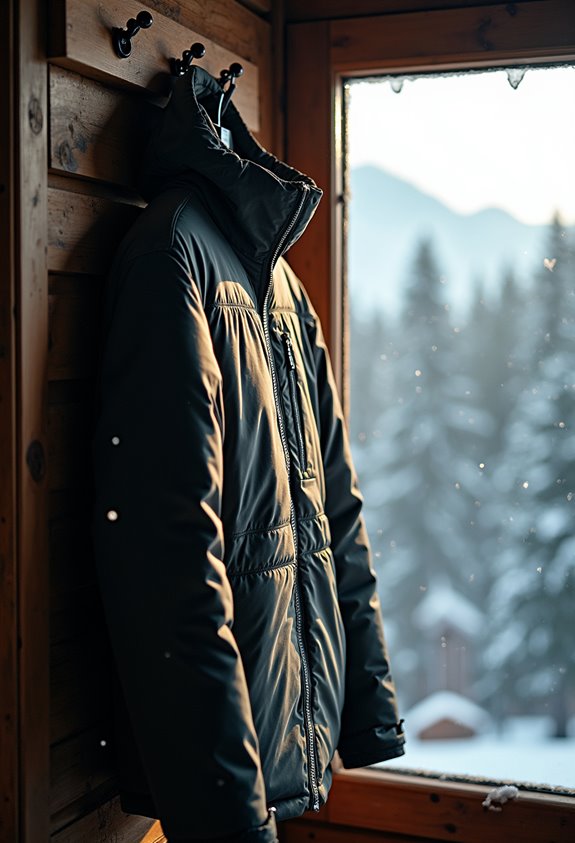
Insulation effectiveness plays a significant role in determining a winter sports jacket’s performance, impacting not just warmth, but also weight and overall comfort during cold weather activities. When examining insulation materials comparison, down insulation stands out for its low weight and superb warmth in dry conditions, while advanced synthetics like Thermoball and Polartec Alpha excel in retaining warmth even when wet. The insulation thickness impact is vital; jackets with greater thickness typically provide more warmth, especially synthetic options ranging from 100-200g designed for severe cold. A thoughtful selection between down and synthetic options guarantees skiers enjoy peak performance, allowing them to embrace their passion in comfort and style, elevating their overall winter experience. Additionally, features like insulation ratings can help determine the best options for extreme cold conditions.
Ventilation and Temperature Regulation

Ventilation and temperature regulation in winter sports jackets are essential elements governing a skier’s comfort and performance, as these features guarantee that body heat and moisture are effectively managed during intense activities on the slopes. Jackets featuring breathable materials, such as mesh, facilitate airflow, enhancing moisture control while skiing. Innovatively designed adjustable vents allow users to customize airflow, catering to variable weather conditions and activity levels. Effective systems use evaporative cooling to maintain body temperature, especially in high sweat zones like the back. With options like Kjus’s inner forearm vents and Columbia’s heat-retaining technologies, skiers can enjoy warmth without sacrificing ventilation. When choosing a jacket, prioritize these elements for an optimized skiing experience, balancing comfort and performance flawlessly. Additionally, incorporating features like waterproof technology can further enhance the jacket’s functionality in wet conditions.
Functional Features and Ergonomics

A well-designed winter sports jacket not only enhances performance but guarantees maximum comfort by incorporating functional features that cater to the dynamic movements of skiing. Prioritizing ergonomic design, many jackets feature articulated sleeves and stretch panels to facilitate mobility enhancement, allowing skiers to navigate slopes freely. Additionally, a relaxed fit is essential for unencumbered movement, while tailored silhouettes offer a modern aesthetic without sacrificing performance. Pockets like fleece-lined handwarmers and secure zippered options provide easy access to essentials, enhancing convenience on the go. Moreover, ergonomic seams and long sleeves contribute to overall comfort during intense activities. By selecting jackets that merge these functional elements, winter sports enthusiasts can fully engage in their passions while feeling confident and supported. The importance of frequent waxing ensures optimal ski performance and maintains the longevity of gear.
Durability and Maintenance

Durability and maintenance play a pivotal role in the longevity and performance of winter sports jackets, particularly for those who actively engage in skiing and other demanding outdoor activities. A thorough durability assessment should include evaluating materials like heavy-duty fabrics and reinforced seam construction, essential for withstanding harsh conditions. Maintenance tips further enhance a jacket’s lifespan; regularly inspect seams and zippers, use gentle detergents for cleaning, and avoid fabric softeners to keep water resistance intact. Additionally, reapplying Durable Water Repellent (DWR) coatings will help preserve waterproofing. By following these practices, including appropriate storage in cool, dry conditions, skiers can effectively maintain their jackets’ insulation and performance, ensuring comfort and protection during adventures on the slopes. Using temperature regulation features can also contribute to better comfort and performance during winter sports.
Style and Packability
When considering winter sports jackets, style and packability are essential attributes that greatly influence both aesthetics and practicality for enthusiasts of cold-weather activities. The latest fashion trends showcase versatile jackets that seamlessly shift from slopes to urban settings, incorporating chic elements like faux fur and cropped designs while remaining functional. Additionally, lightweight materials and compact designs enhance travel convenience, allowing these jackets to be effortlessly folded or rolled for storage. Integrated storage options and compression features guarantee that essentials remain organized and accessible, catering to an active lifestyle. By prioritizing both style and packability, winter sports enthusiasts can confidently select a jacket that complements their fashion sense while meeting practical performance needs in snowy adventures. Furthermore, many jackets feature advanced technology ensuring protection against rain and snow, enhancing their usability in various weather conditions.
Water Resistance Technologies
Water resistance technologies play a crucial role in the effectiveness of winter sports jackets, with various options available to cater to the needs of outdoor enthusiasts. Key features include waterproof membranes, such as Gore-Tex, which allow sweat vapor to escape while blocking external water. DWR treatments enhance water beading but require maintenance to stay effective. Seam sealing guarantees watertight structures, essential for enduring extended exposure to harsh weather. Construction techniques, like 3-layer bonding, provide superior durability and resistance against wet conditions. Additionally, breathable fabrics optimize moisture management, keeping the wearer comfortable during high-intensity activities. With these technologies combined, winter sports jackets not only protect against the elements but promote an active and enjoyable outdoor experience. The waterproofing technologies used in ski gloves can also inform jacket design for enhanced performance in winter sports.
Insulation Types Comparison
In the domain of winter sports jackets, insulation is a fundamental component that greatly influences overall comfort and performance. Down insulation boasts an excellent warmth-to-weight ratio, making it ideal for cold, dry climates; however, its performance declines when wet. In contrast, synthetic insulation shines in cold, wet conditions, retaining warmth even when damp and typically being more affordable and durable. For those seeking a balance, hybrid insulation combines down and synthetic to optimize warmth while managing moisture, suitable for varying conditions. Additionally, alternative materials, such as wool blends and plant-based fibers, provide eco-friendly options though often with less warmth. Ultimately, understanding insulation weight and performance is key to selecting a jacket that fits both needs and preferences. Many lightweight ski jackets feature advanced insulation that provides warmth without bulk, making them ideal for winter sports.
Ventilation Features Design
Ventilation features in winter sports jackets play an essential role in regulating body temperature and enhancing overall comfort during outdoor activities. Effective designs incorporate mesh panels strategically placed in areas like the chest and back, providing essential airflow without compromising protection. Jackets with adjustable hoods are a must, allowing wearers to customize their coverage against wind and moisture while maintaining breathability. The use of breathable membranes, combined with zippered vents in underarm and core areas, also enhances airflow during high-intensity activities. Stretch woven fabrics and moisture-wicking linings further support sweat management, allowing athletes to stay dry and comfortable. Prioritizing these ventilation features guarantees that winter sports enthusiasts can enjoy their adventures without overheating, fostering a sense of belonging in the community. Additionally, incorporating materials with moisture-wicking properties can significantly improve overall performance and comfort during winter sports.
Practical Features for Convenience
Winter sports jackets are not just designed for warmth and protection; they also prioritize convenience to enhance the overall outdoor experience. Practical features like strategic pocket placement enable easy access to essentials, such as ski passes and snacks, while adjustable features, like hoods and cuffs, guarantee a tailored fit for both comfort and protection. For instance, helmet-compatible hoods provide a secure fit, reducing the risk of snow entry, while adjustable cuffs keep cold air at bay. Additional elements, like two-way zippers and snow skirts, allow for flexibility and prevent snow intrusion during high-energy activities. Moreover, incorporating safety certifications ensures that the jacket meets the necessary standards for winter sports, enhancing the confidence of outdoor enthusiasts. These thoughtful conveniences not only elevate performance but also foster a sense of belonging among outdoor enthusiasts, making the experience more enjoyable and stress-free.
Frequently Asked Questions
How Do I Choose the Right Jacket Size for Winter Sports?
To choose the right jacket size for winter sports, one should measure chest, arm, waist, and hip circumferences. Sizing and insulation types should align with activity needs, ensuring comfort and performance while promoting a sense of belonging.
Are There Specific Brands Renowned for Quality Winter Sports Jackets?
Despite the allure of luxury and practicality, brand comparisons reveal that Arc’teryx excels in quality materials for durability, while Patagonia champions sustainability. Enthusiasts often find solace in brands like The North Face and REI for diverse options.
How Do I Clean and Maintain My Winter Sports Jacket?
To clean and maintain a winter sports jacket, utilize proper cleaning techniques like gentle washing and low-heat drying. Follow essential maintenance tips, ensuring careful storage and occasional professional cleaning for longevity and ideal performance.
Can I Use the Jacket for Activities Other Than Winter Sports?
Yes, the jacket supports multi-purpose use, proving ideal for casual wear, hiking, cycling, and running. Its versatility guarantees warmth and protection across various activities, fostering a sense of belonging among outdoor enthusiasts and adventurers alike.
What Are the Common Color Options Available for Winter Sports Jackets?
Common color options for winter sports jackets include neutral shades, earth tones, bold colors, metallic hues, and pastels. These reflect current color trends and seasonal palettes, catering to individual styles while promoting a sense of belonging among wearers.